
The Joke’s on Us! Funny Yorkshire Place Names in Celebration of Yorkshire Day
Every Yorkshire Day, we celebrate by finding a different focus on the county we're proud to call home. Last year, we explored some of Yorkshire's best-loved sayings and what they really mean. This year, we're taking a road trip across the county to discover some of the funny Yorkshire place names that have been making locals laugh out loud and visitors do a double take for generations.
Yorkshire is famous for its breathtaking scenery, historic cities, spectacular coastline and welcoming communities. But tucked away amongst the rolling hills, bustling market towns and picturesque villages are some place names that sound almost too strange to be real. From names that make children giggle to villages that leave satnavs slightly confused, Yorkshire has no shortage of wonderfully quirky locations.
Of course, every unusual place name has a story. Many date back hundreds of years, with roots in Old English, Norse or Anglo-Saxon, while others have evolved over time into the names we know today. Even if they sound amusing now, they're all part of Yorkshire's rich history and character.
We're incredibly proud to be based in Roundhay, North Leeds. Yorkshire Day is a chance for us to celebrate the communities that make it such a fantastic place to live and work. So, put the kettle on, grab a Yorkshire Tea, and join us as we explore some funny Yorkshire place names you'll find across God's Own County.
1. Bedlam (North Yorkshire)
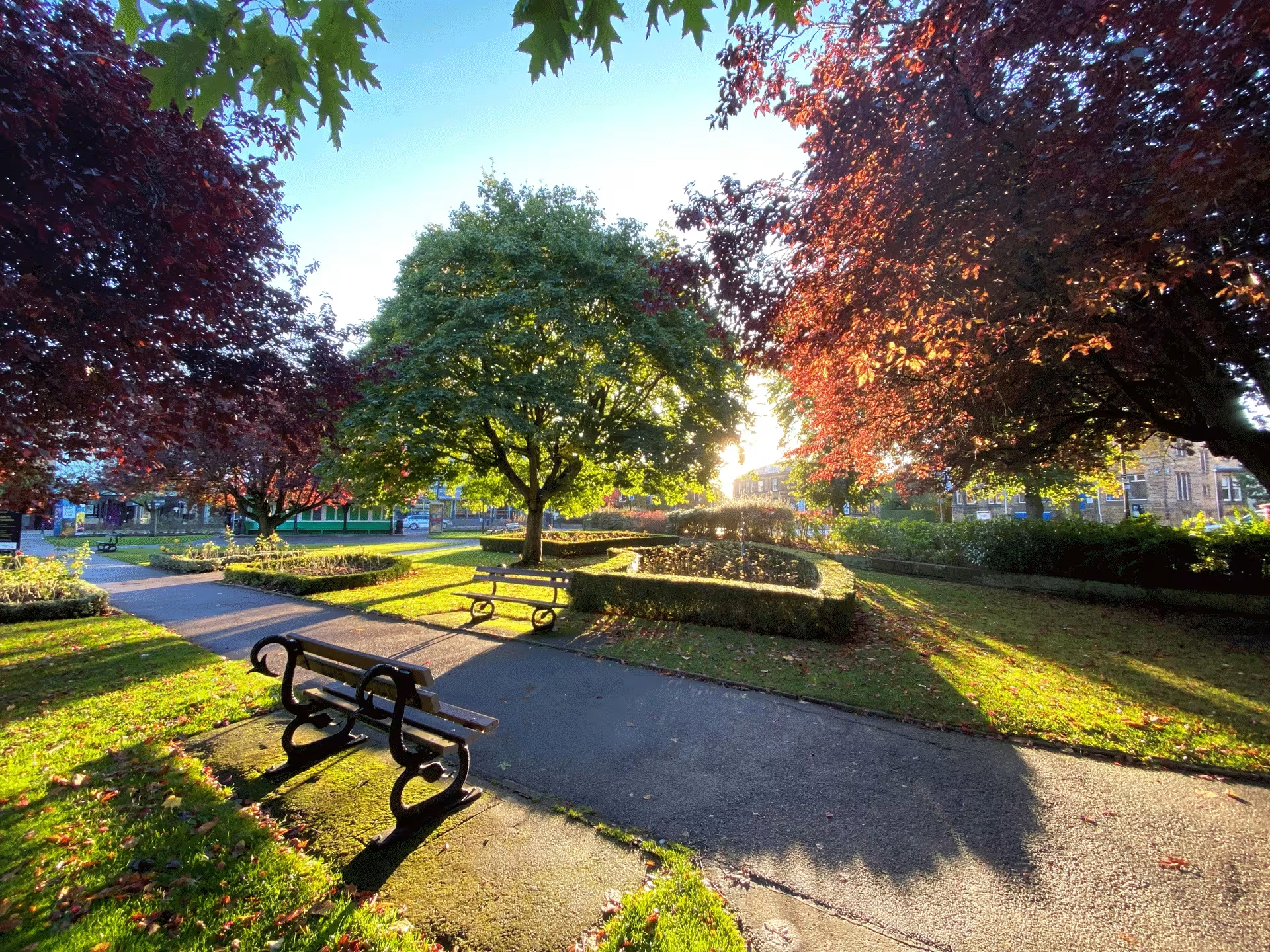
Kicking us off, we have the hamlet of Bedlam in the parish district of Clint-Cum-Hamlets. Until 1974, Bedlam was part of the West Riding of Yorkshire. However, from 1974 until 2023, it was part of the Borough of Harrogate and is now administered by North Yorkshire council.
Bedlam in Yorkshire has a rich history, steeped in folklore. Isolated in the rural landscape, ghost stories and superstitions abound.
Toponymy of Bedlam, North Yorkshire
It’s most likely that the name, Bedlam, came from the Old English “Botlum” meaning “at the buildings.” It could also have come from the Old Norse equivalent of the same meaning. It is not related to the psychiatric hospital
2. Crackpot (North Yorkshire)
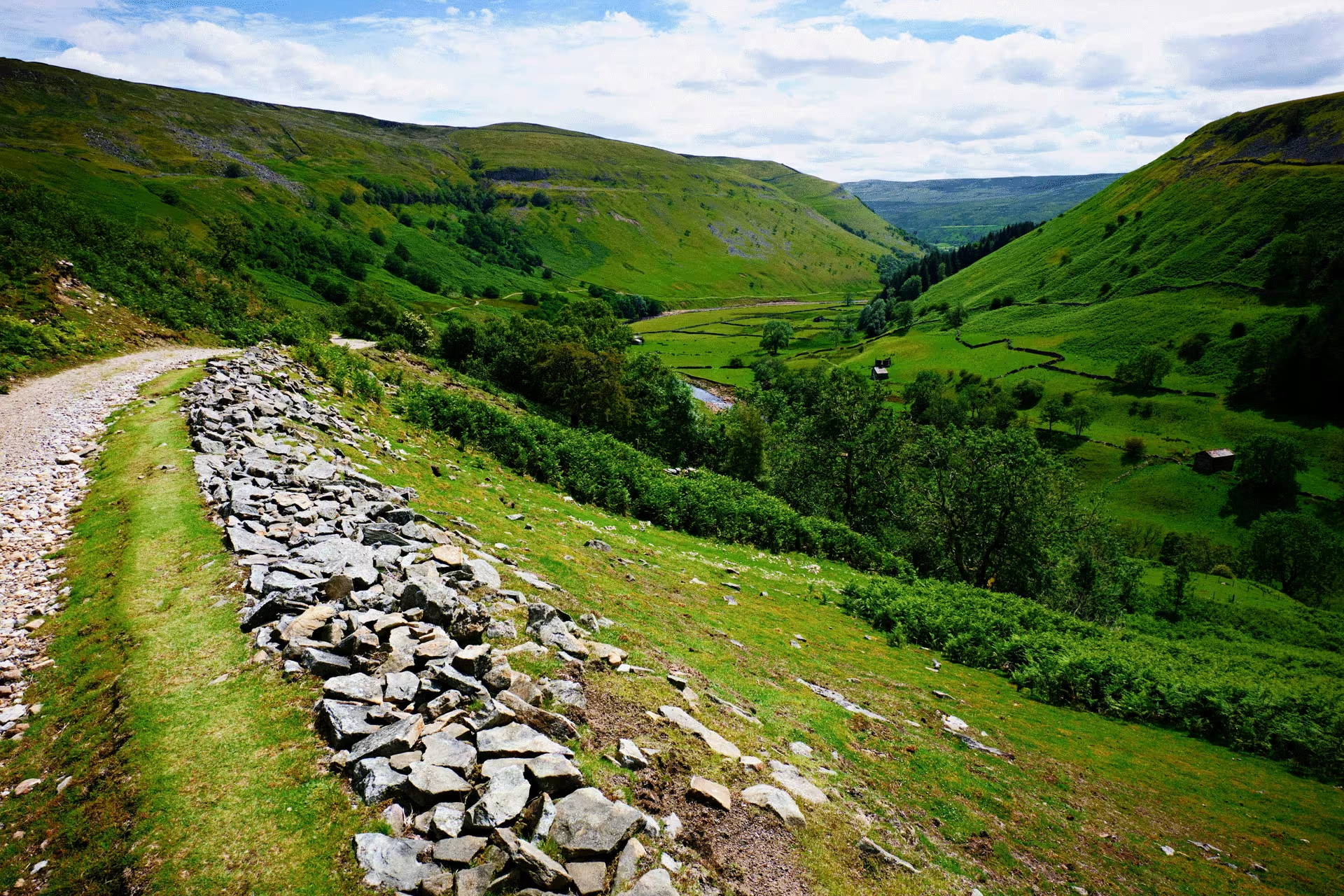
Swaledale is a stunning part of the world, with rolling hills and cosy farmlands. It is also home to the village of Crackpot. This remote village is home to two historic buildings.
18th century Crackpot Cottage, which has been transformed in recent years into a luxury glamping site
17th century Crackpot Hall, which is now sadly in ruins. Although the old, ruined farmhouse is still a fascinating remnant of history and well worth a visit.
To the south of Crackpot, in the Scurvy Scar, sits Crackpot Cave. The cave is famous because there is a column in the centre, where a stalagmite and a stalactite have joined together over the years. You can make your way down there, if you’re willing to brave the aptly-named Knee-Wrecker Passage.
Toponymy of Crackpot, North Yorkshire
The name Crackpot derives from the Old English word for crow (kraka) and the Viking word for a deep hole or riverbed (pot). Not so crazy after all.
3. Booze (North Yorkshire)
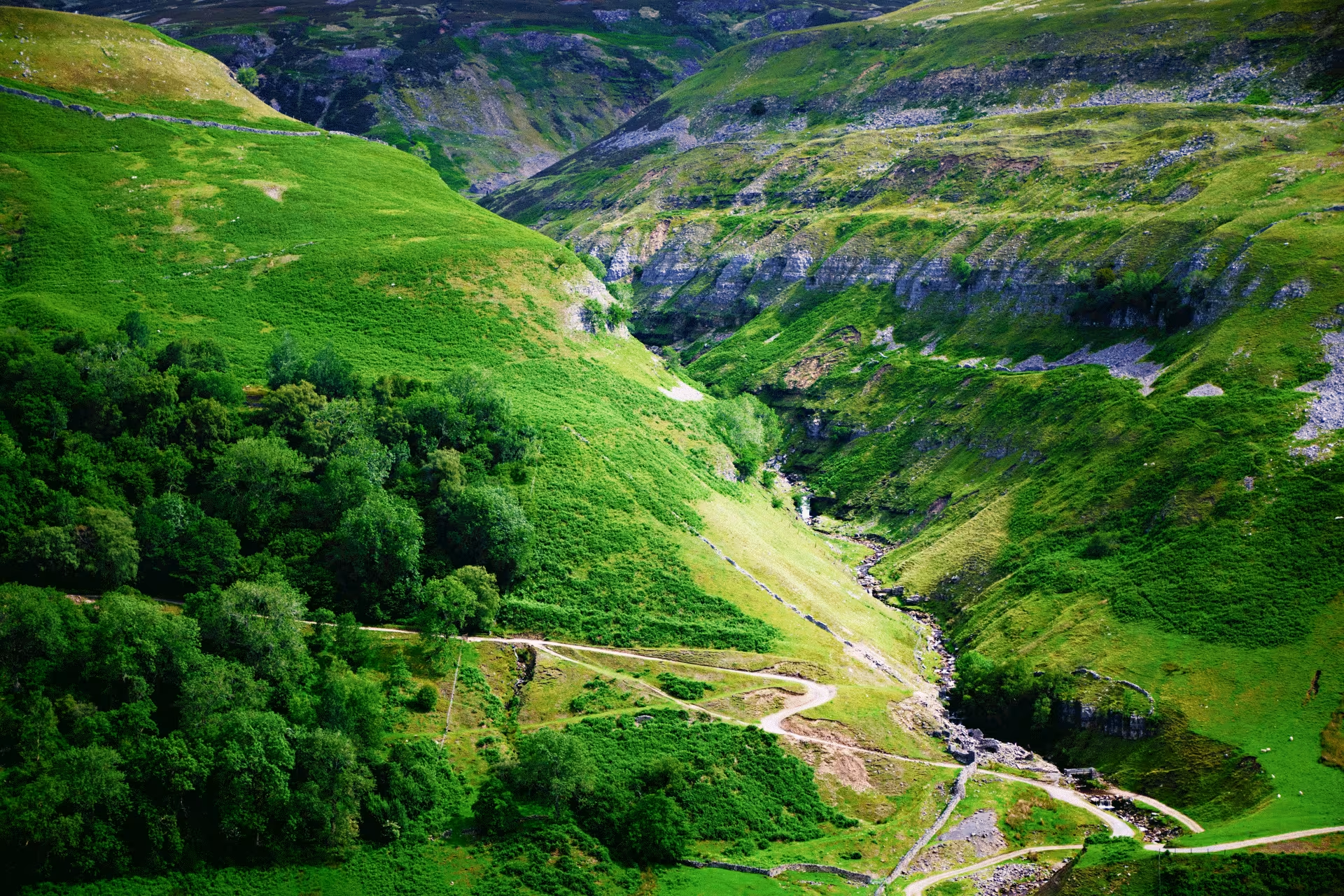
Booze is a hamlet situated in Akengarthdale. There are just 11 households in Booze and the only road access is by a steep, narrow single-track road from Langthwaite.
The hamlet overlooks the lead mines of Slei Gill, which became slate mines following the collapse of the lead industry at the end of the 19th century. And, speaking of the mines, a local tragedy occurred in the 18th century when a group of miners working underground accidentally blasted into an underground lake. 24 miners and two pit ponies were drowned in the accident. Of those killed, 18 were from Booze.
Sounds like something straight out of a Brontë novel, doesn’t it? And, talking of Yorkshire, we lay claim to the Brontës too!
Toponymy of Booze, North Yorkshire
The earliest record of the name, Booze, comes from 1473. Back in those days, it was known as Bowehaus, which is significantly more gothic than its current iteration. Booze is derived from the Old English word for bow (boga) and house (hus) and became Booze over time.
4. Whip-Ma-Whop-Ma-Gate (North Yorkshire)
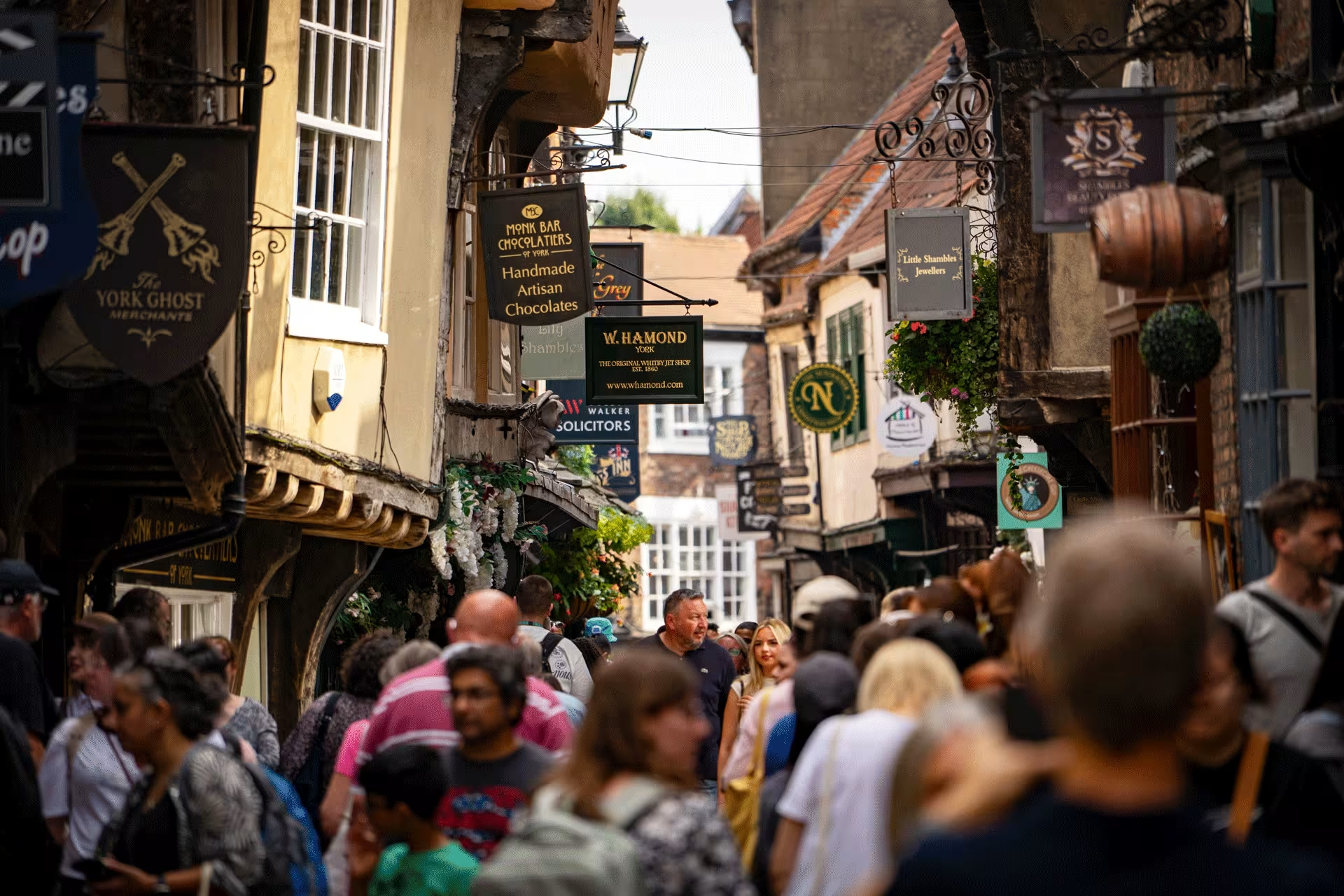
Whip-Ma-Whop-Ma-Gate is a street in the beautiful city of York. This “blink and you’ll miss it” thoroughfare previously held a large church, which has since been demolished. There now stands a smaller church, built from the original church’s remains.
There is a dark history associated with the shortest street in York. Rumour has it that this spot was used for public punishment and humiliation. These days, it’s used mainly for leisure, boasting a brasserie called Trio at No. 3 Whip-Ma-Whop-Ma-Gate, and No. 1-4 News agents.
Toponymy of Whip-Ma-Whop-Ma-Gate, North Yorkshire
Whip-Ma-Whop-Ma-Gate was first mentioned in 1505 as Whitnourwhatnourgate, and then became Whitney Whatneygate. There is no evidence that the name came from public whippings. However, locals will tell you gruesome tales to the contrary. What do you think?
5. Wetwang (East Yorkshire... not Middle Earth)
Wetwang is a Yorkshire Wolds village in the East Riding of Yorkshire.
The village is best known for its Iron Age Chariot burial cemetery at Wetwang Slack. An archaeological investigation was carried out in 2001, which uncovered the remains of three chariot burial gravesites. Each grave contained skeletal remains buried on top of the remains of carts or chariots. All the skeletons were buried with their heads pointing north. Historians speculate that the northerly alignment may represent the driver steering a path to the afterlife. All remains are now in the British Museum.
Wetwang has been referenced in well-known books by both J.R.R.Tolkein and Douglas Adams.
Toponymy of Wetwang, North Yorkshire
One interpretation of the name, Wetwang is from the Old Norse vaett-vangr, which means 'field for the trial of a legal action.' Very apt that a law firm should be covering this history, if we do say so ourselves. Another theory is that it was the "wet field," which opposed the nearby “dry field” at Driffield.
6. Penistone (South Yorkshire)
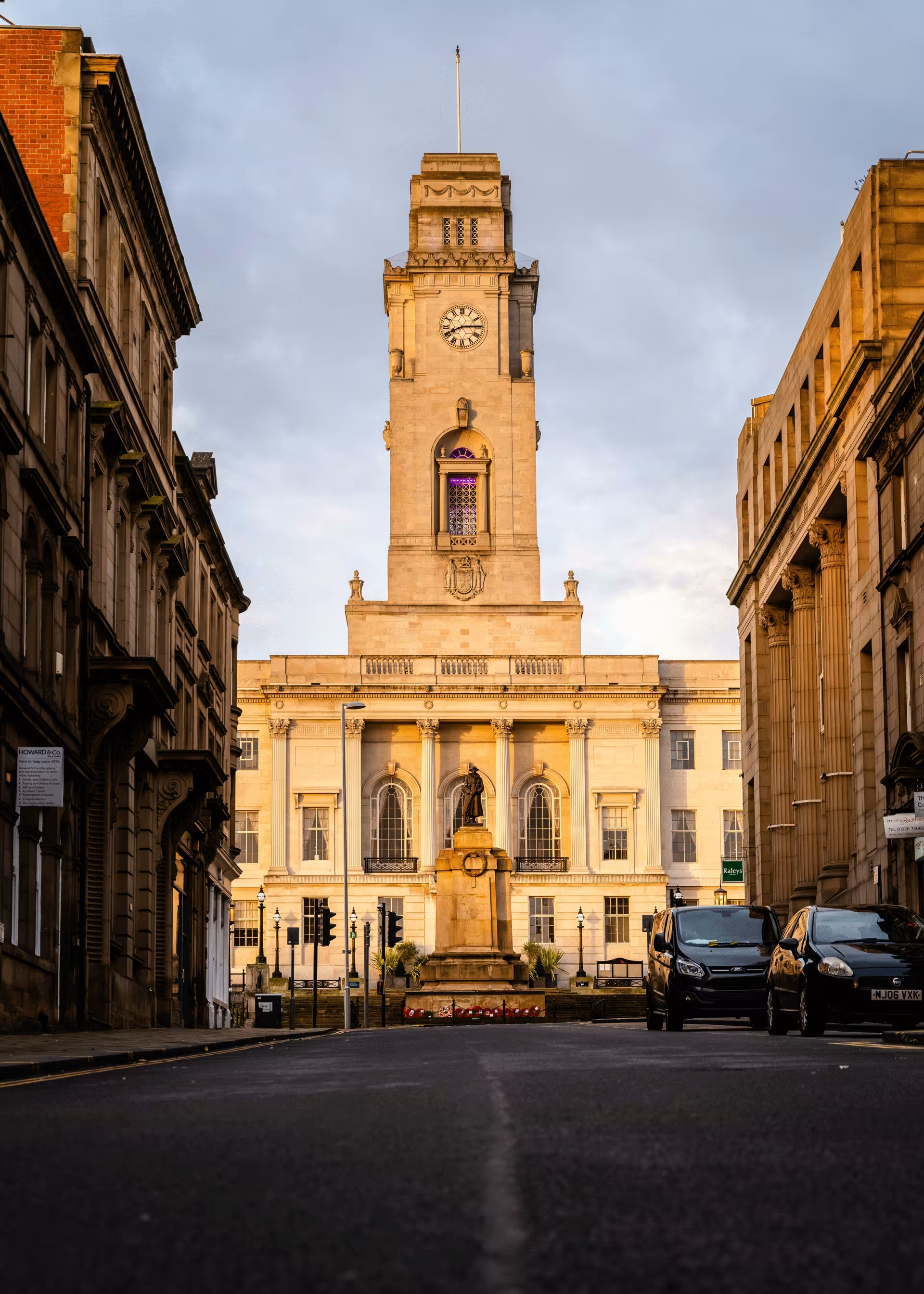
Penistone is a market town in the borough of Barnsley. It has a larger population that our previously mentioned towns, housing over 13,000 residents.
In Viking Times, Penistone was within the Wapentake of Staincross. Prior to 1066, the township was owned by the Saxon Lord, Ailric, who was one of the only Saxon Lords to retain his possessions after William the Conqueror aggressively replaced the English ruling class with Norman nobility. It was razed in 1069 in the Harrowing of the North. The Domesday Book described the remnants of the settlement as “waste” in 1086.
Thankfully, Peniston recovered and became reknowned for its Peniston cloth (known as “forest white”)
Toponymy of Penistone, South Yorkshire
Originally, Peniston was named Pengestone or Pangeston. It’s thought that this meant "the farmstead at the hill called Penning." While the name does look funny, the pronunciation of Penistone is actually peh·nuh·stn.
7. Butt Hole Road (South Yorkshire)
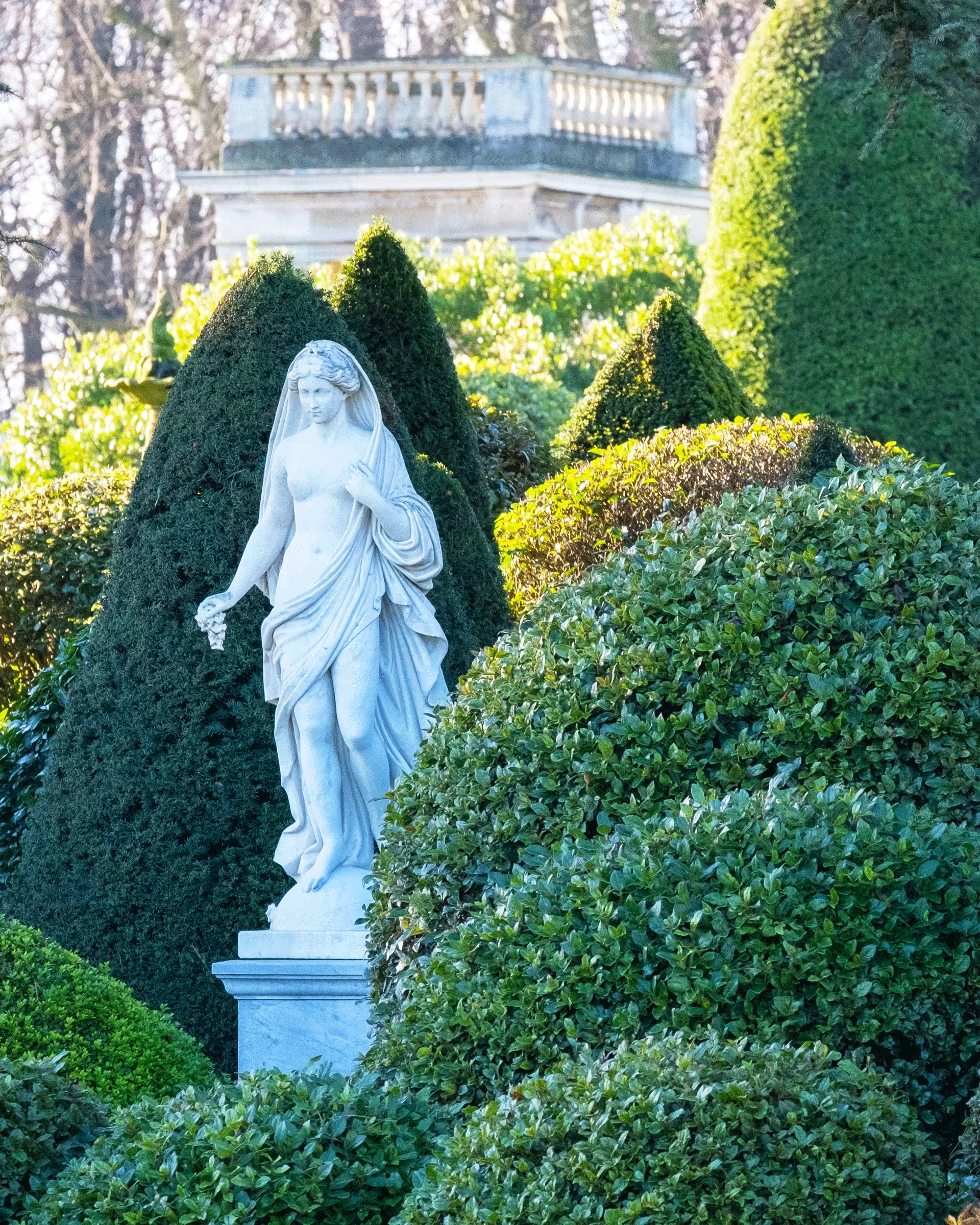
Butt Hole Road is located in Conisbrough, Doncaster. It’s a short street that has become famous for its suggestive name. However, Butt Hole Road became a thing of the past in 2009 when, following pranks and address issues, the name of the road became Archers Way.
The street itself is fairly unremarkable, being very short and intersecting with Butterbusk and Ravens Walk, ending with the intersection onto Sheffield Road. In 2004, the street appeared in a Reuters article that went viral, leading to tour buses bringing American tourists to the area so they could have their pictures taken with the hilarious sign. However, the throng of tourists and the street name itself caused all kinds of havoc for the locals, who were unable to book taxis or have food delivered.
Despite the name change, the legend of Butt Hole Road persists to this day.
Toponymy of Butt Hole Road, South Yorkshire
While there is no official record of the road name, it’s believed that Butt Hole Road got its name due to a communal waterbutt that was located in the area.
8. Blubberhouses (North Yorkshire)
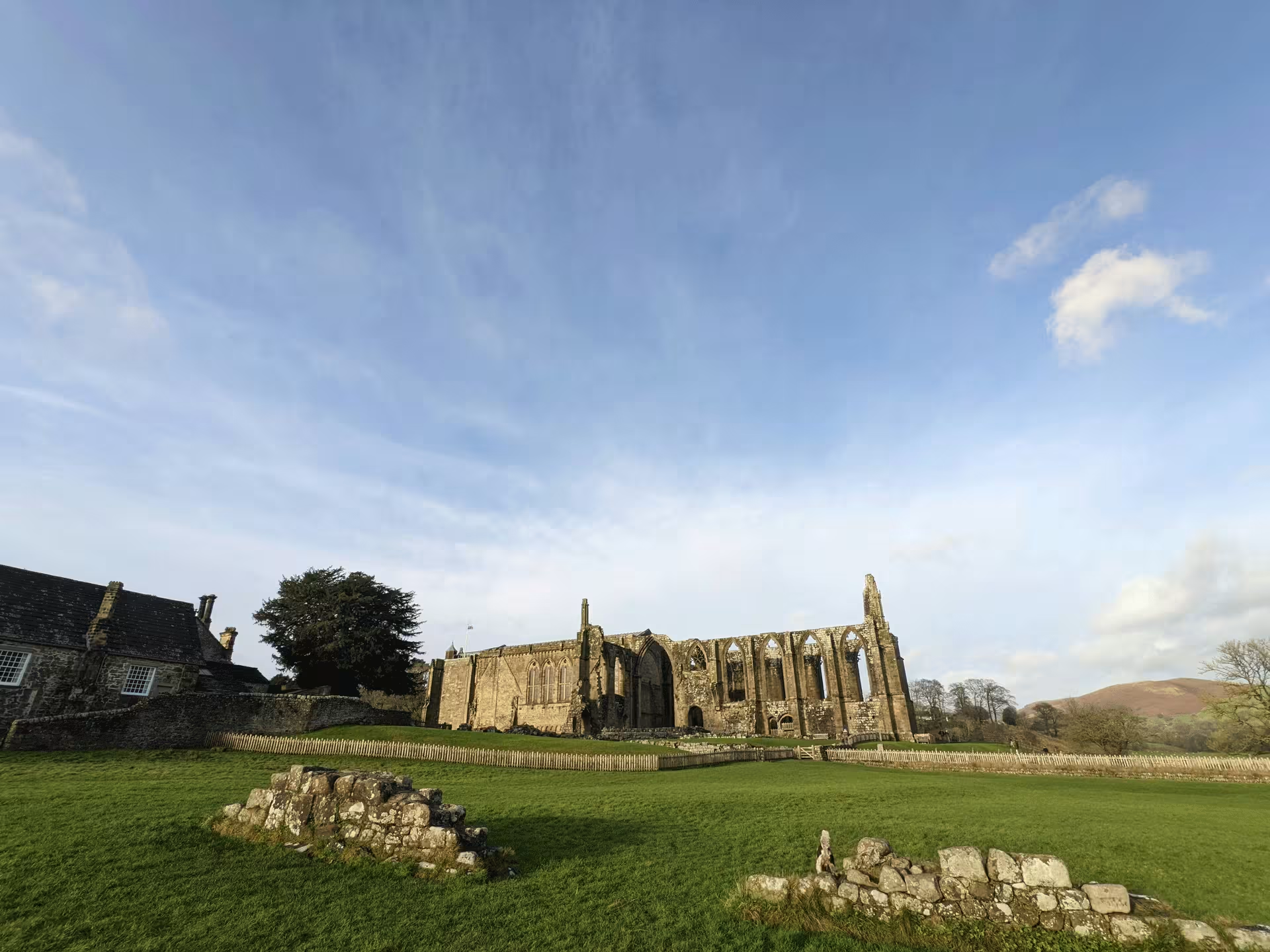
Blubberhouses is a small village in the Washburn Valley. The population, as at the 2011 Census, was fewer than 100 souls. Rather than expanding, in 2015, North Yorkshire County Countil estimated the population of the parish to be around 40.
Despite its tiny size, Blubberhouses saw Stage 2 of the Tour De France pass through on its way from York to Sheffield. It also became a key setting for local composer, Andy Tillison, who’s electronic sinfonia, Le Sacre Du Travail, was recorded by progressive rock band, The Tangent. While an interesting collection of music, it is an acquired taste. But don’t take our word for it – you can find the recording on Spotify.
Toponymy of Blubberhouses, North Yorkshire
The name, Blubberhouses, derives from the Anglo-Saxon “Bluberhūs,” which translates to "the house which is at the bubbling stream." There was an “um” added later, which accounted for more than one house at the bubbling stream - “Æt Bluberhūsum.”
9. Tickle Cock Bridge (West Yorkshire)
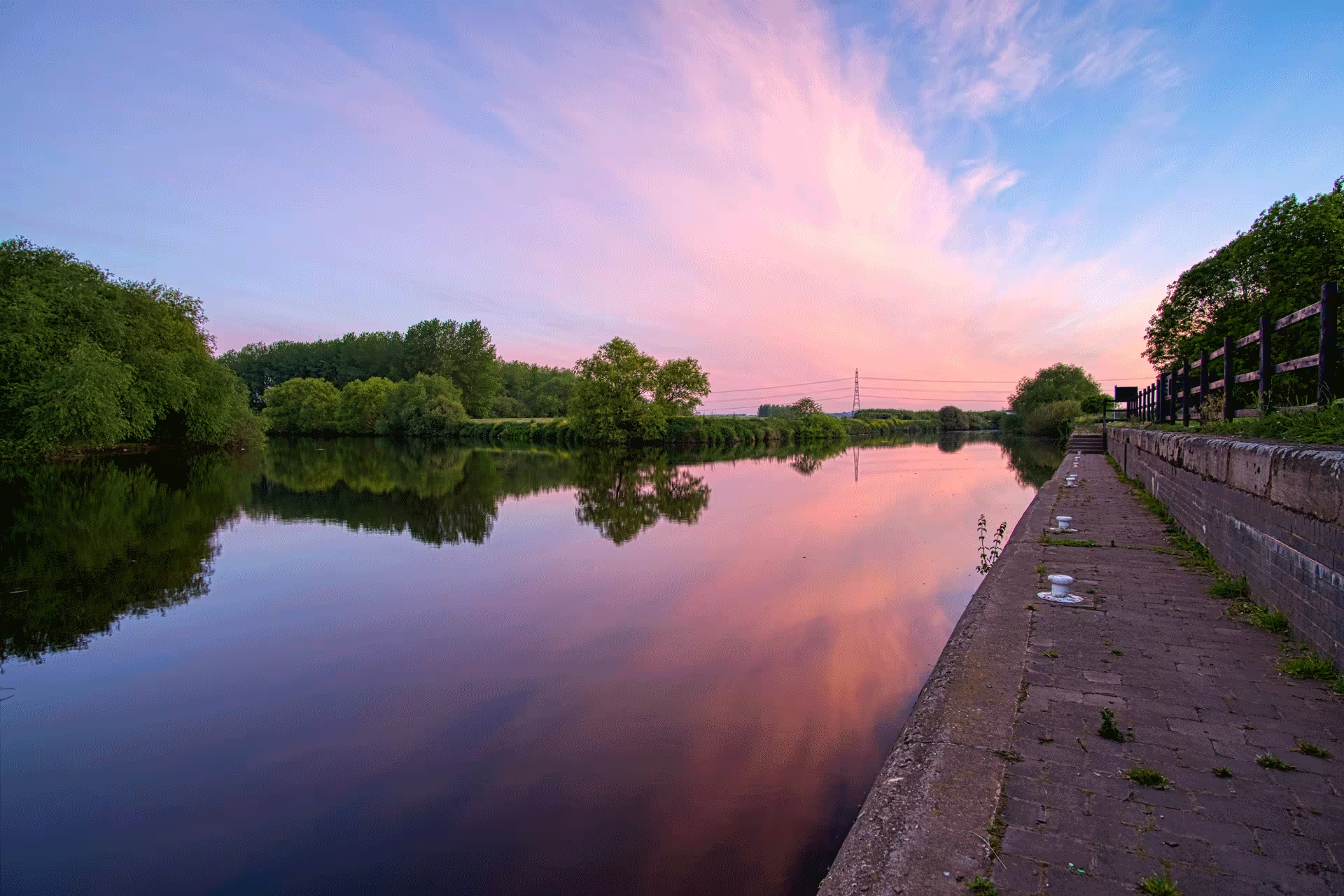
Tickle Cock Bridge is a pedestrian underpass located in Castleford. It was built in 1890 and connects local residential areas to the Carlton Lanes Shopping Centre.
The original Tickle Cock Bridge was often described as small, narrow and gloomy. Some residents claimed it was very scary to walk through. As a result, Wakefield Council made plans to widen and modernise it. They also took that opportunity to rename it to Tittle Cott. However, residents were up in arms about this change and Wakefield Council were forced to revert back to Tickle Cock Bridge after the backlash.
Toponymy of Tickle Cock Bridge, West Yorkshire
Unlike the other funny Yorkshire place names on this list, Tickle Cock Bridge was named after one of its functions. Given that the word “cock” was first coined as a vulgar term in the 16th century, it’s hard to believe that the namers of this underpass didn’t know what they were doing. During the late 19th and early 20th centuries, historian Brain Lewis believes that "[the underpass] would function in the same way as any 'monkey run', where you paraded up and down to find a boyfriend or girlfriend." So... just plain rude, that one!
10. The Land of Nod (East Yorkshire)
The Land of Nod is a tiny, sleepy hamlet halfway between Selby and Hull. It’s estimated to have fewer than 50 residents. Being such a small place, The Land of Nod is very quiet and not a lot is known about it.
Toponymy of The Land of Nod, West Yorkshire
The Land of Nod comes from Genesis in Bible. After murdering his brother, Abel, Cain was exiled to the Land of Nod. Nod comes from the Hebrew verb lindod which means “to wander.” The Land of Nod refers to the wilderness where Cain was forced to go as a punishment. Which makes sense when you take into the size and remoteness of this tiny hamlet.
11. Upperthong, Netherthong & Thongsbridge (West Yorkshire)
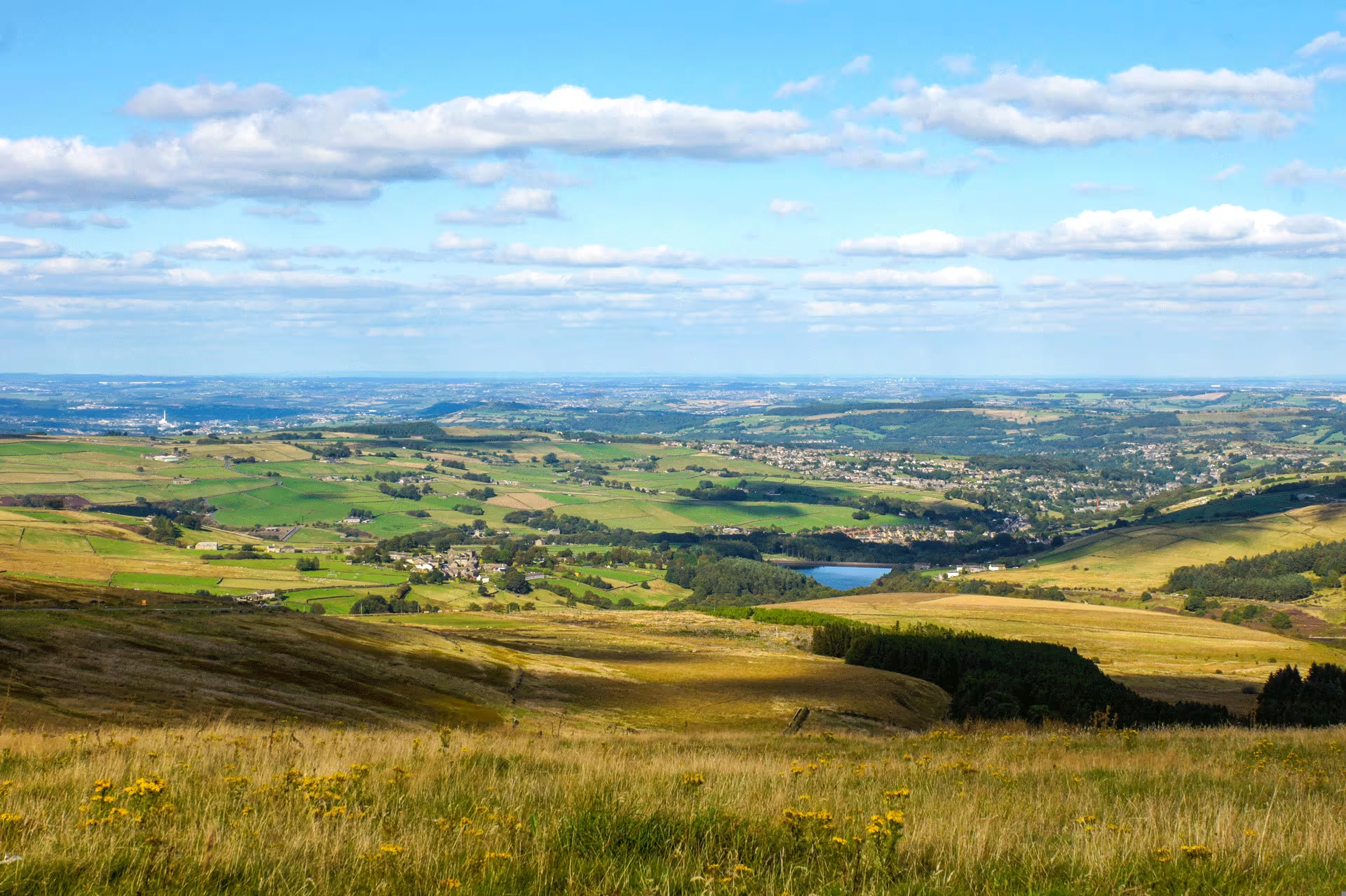
This one’s a three-fer. Upperthong, Netherthong and Thongsbridge are lovely little villages in the Holm Valley, near Holmfirth.
The settlements were originally within the parish of Almondbury and were all involved with woollen manufacturing. In 1852, the whole area was devastated by the Holmfirth Flood and Thongsbridge being situation in the bottom of the valley, lost several houses and part of the textile mill that had been its lifeline. In 2026, these are highly sought-after villages.
Upperthong is known as the home of the annual “World Welly Wanging Championships.” While Thongsbridge is also a key landmark on the Tour de France.
Toponymy of Upperthong, Netherthong & Thongsbridge, West Yorkshire
Upperthong: From Old English uferra (upper) and thwang (narrow strip of land), designating a higher strip of settlement.
Netherthong: From the Old English neotherra (lower) and thwang, indicating a strip of land on lower ground.
Thongsbridge: Originally documented as Thwongs Bridge, the name refers to the bridge crossing the River Holme, which marked the historical boundary line between the Netherthong and Wooldale townships
12. Fryup (North Yorkshire)
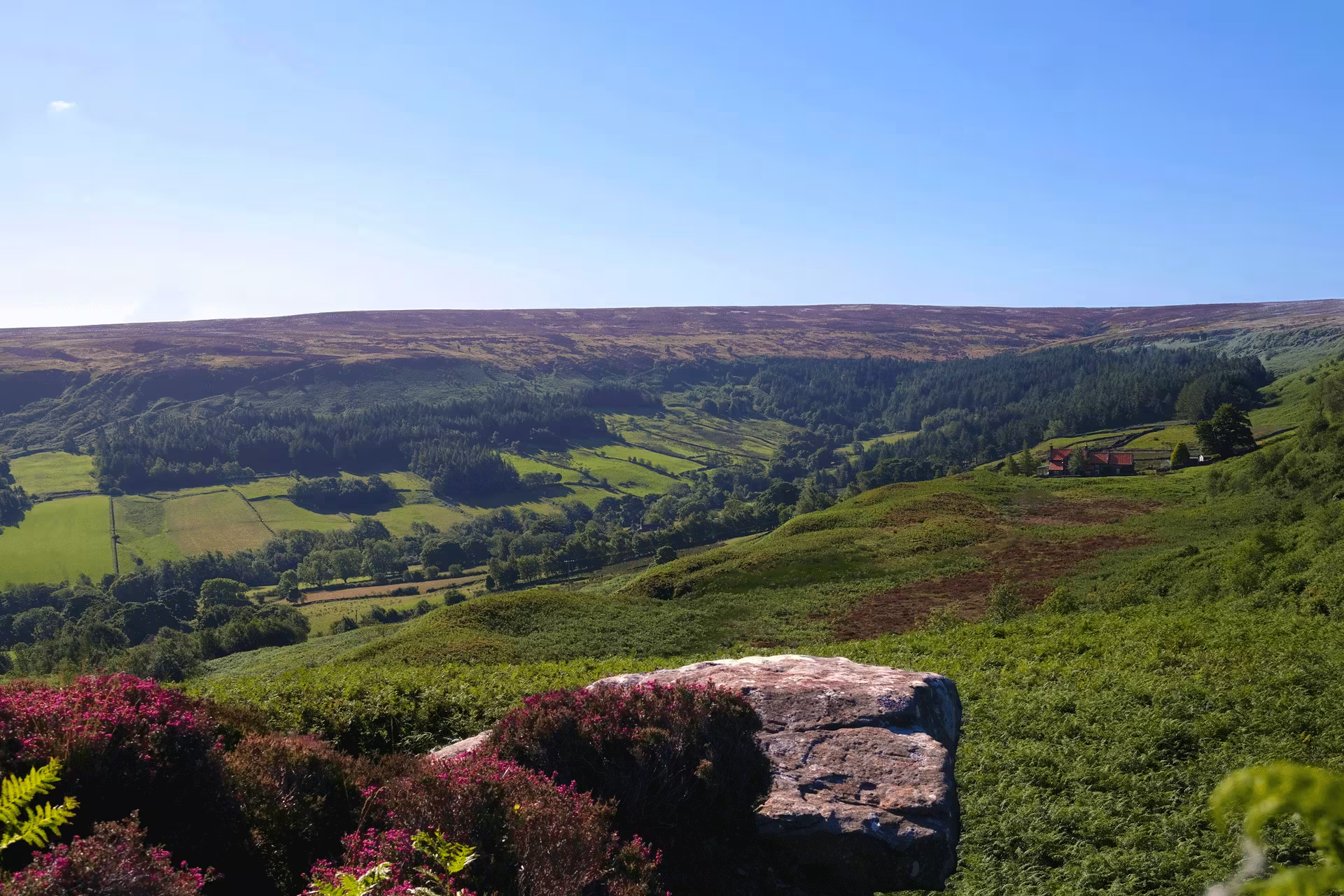
Fryup is another hamlet. This one located in the North York Moors National Park. It is in the civil parish of Danby and is located near Great Fryup Beck in Great Fryup Dale.
As with most rural villages, Fryup has its fair share of folklore and spooky tales. For example, an old woman at Fryup would keep the Mark's E'en Watch, which is held annually on 24th April. This was her duty, as she lived alongside a corpse road known as Old Hell Road. The practice involved a village seer holding vigil between 11 pm and 1 am to watch for the wraiths of those who would die within the year.
Toponymy of Fryup, North Yorkshire
The name, Fryup, could be a reconstruction of the earlier name Frehope, from the 14th century. Fryup was first recorded as the hamlet’s name in the 19th century. The name element Fre may be a reference to the Norse goddess Frigg. In Old English hōp, or Middle English hope, meant “valley.”
13. Giggleswick (North Yorkshire)
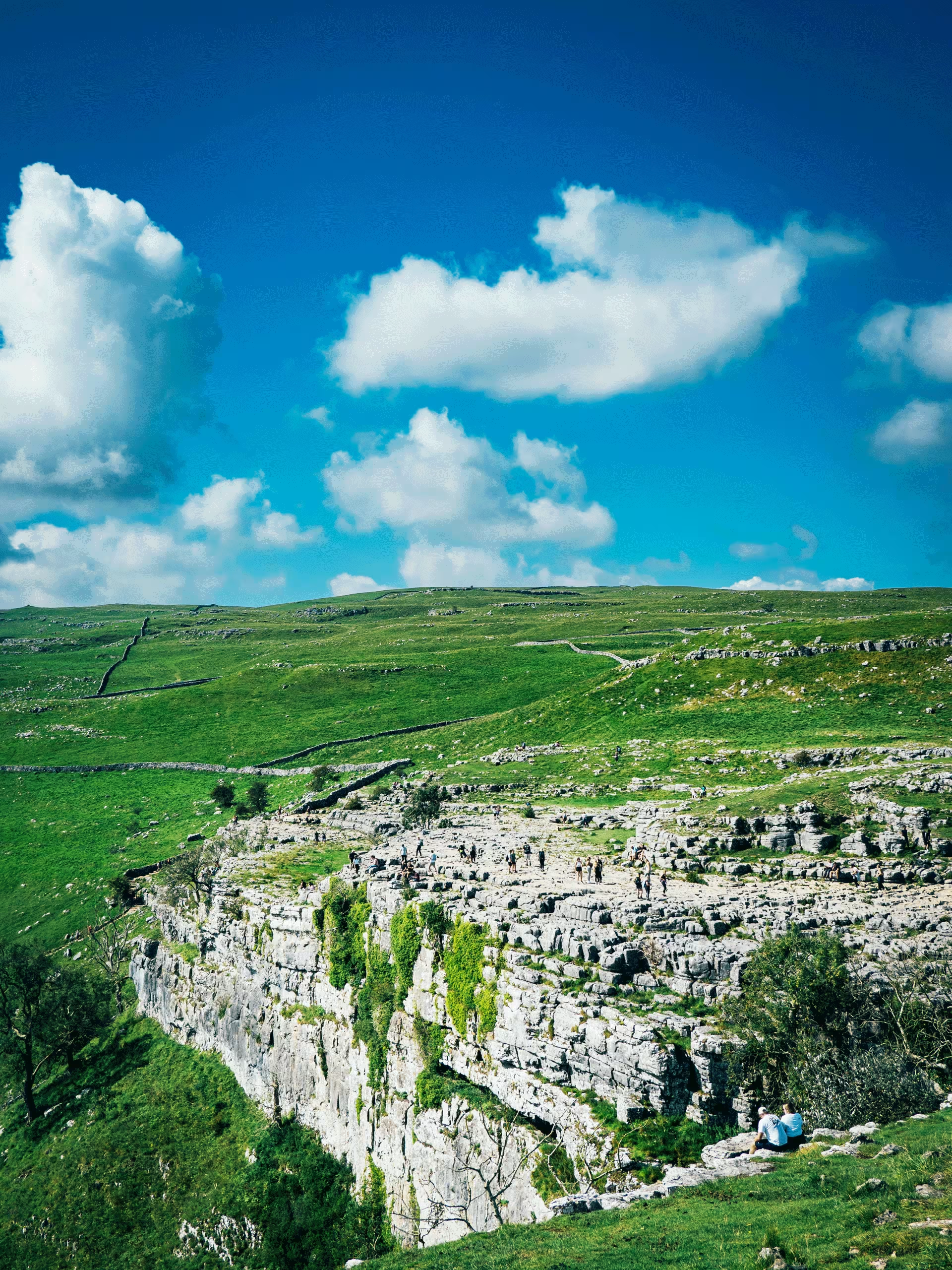
Giggleswick is a village in North Yorkshire near the town of Settle.
Despite being a small place, Giggleswick has been home to several celebrities. Including Richard Whiteley of Countdown fame, Star Wars actor, Anthony Daniels, and Sir Nevill Francis Mott, who won the Nobel Prize in Physics in 1977.
Giggleswick is also a popular destination for rock climbers, as its limestone crag has been retro-bolted with many routes.
Toponymy of Giggleswick , North Yorkshire
The name, Giggleswick, derives from the personal name of an Anglo-Sacon landowner, and the word “wick” which is the Old Norse term for a dwelling.
14. Thwing (East Yorkshire)
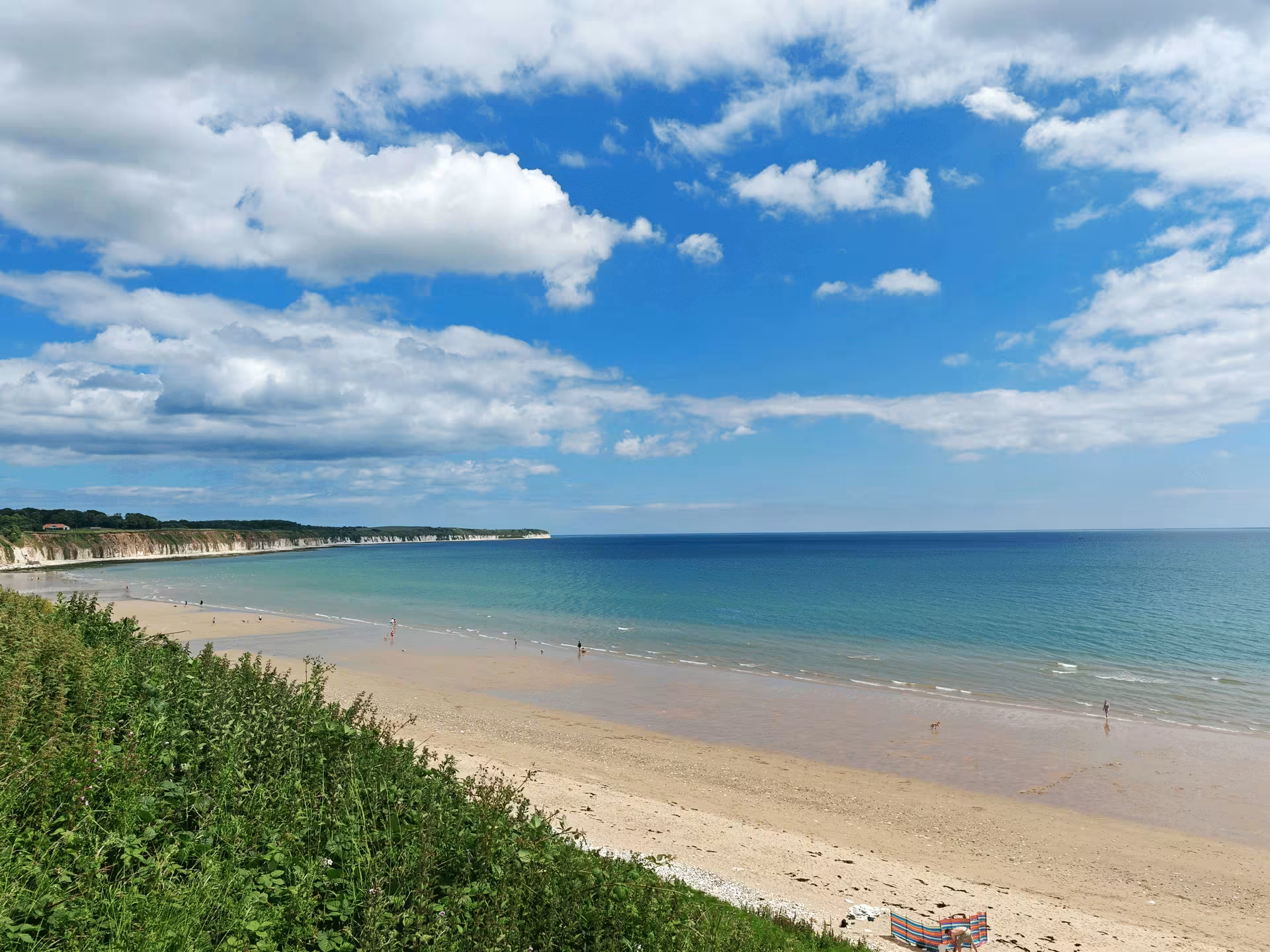
Thwing is a village in the Yorkshire Wolds not far from the beautiful coast of Bridlington.
There has been human activity in the area of Thwing since at least the Neolithic Era. Evidence of a henge dating from the late Neolithic period has been discovered after excavation. As well as a hill fort from the bronze age, including artefacts that point to bronze metalworking.
Toponymy of Thwing, West Yorkshire
A Thwing is a narrow strip of land. The word derives from the Old Scandanavian, thvengr, or the Old English thweng. The village is recorded in the Domesday Book of 1086 as Tuennc, an ancient spelling of Thwing, in the Hundred of Burton.
15. Thornton-Le-Beans (East Yorkshire)
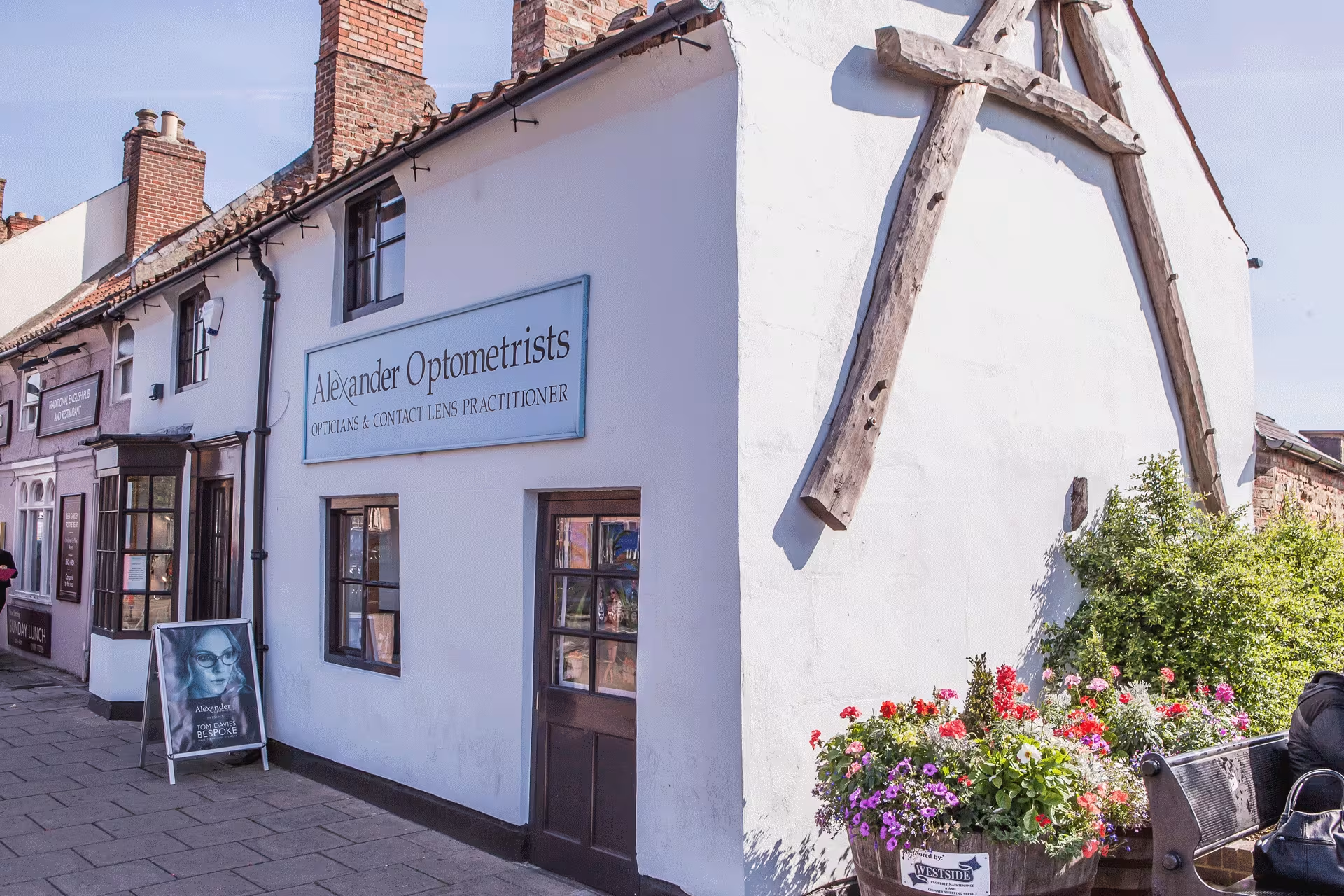
Thornton-Le-Beans is a village near Northallerton. There’s not much in the way of exciting news about this village with a very funny Yorkshire Place name, but they have one pub, which is called The Crosby and boasts a sought-after campsite.
Author, Bill Bryson, has said that he would like to be buried in Thornton-Le-Beans, purely down to its silly name.
Toponymy of Thornton-Le-Beans, East Yorkshire
Thornton means a farm with bushes. The farm also grew and supplied beans, so in 1534, it was named Thornton-in-Fabis, which is Latin for Thornton-Le-Beans.
16. Wigtwizzle (South Yorkshire)
And here we have another hamlet, this time in the civil parish of Bradfield. It is also near Penistone (see point 6.) Prior to this, Wigtwizzle was part of the parish of Ecclesfield in the wapentake of Upper Strafforth.
In 1610, a large house called Wigtwizzle Hall was built. It was sadly demolished in 1935, but the stone was used, in part, to build the local reservoirs of Broomhead and More Hall.
Toponymy of Wigtwizzle
The word, Wigtwizzle, is an evolution of the word Wigtwisle. It derives from the name of an Anglo-Saxon land-owner, Wicga. It means "Wicga's land at the confluence of two streams.”
17. Boggle Hole (North Yorkshire)
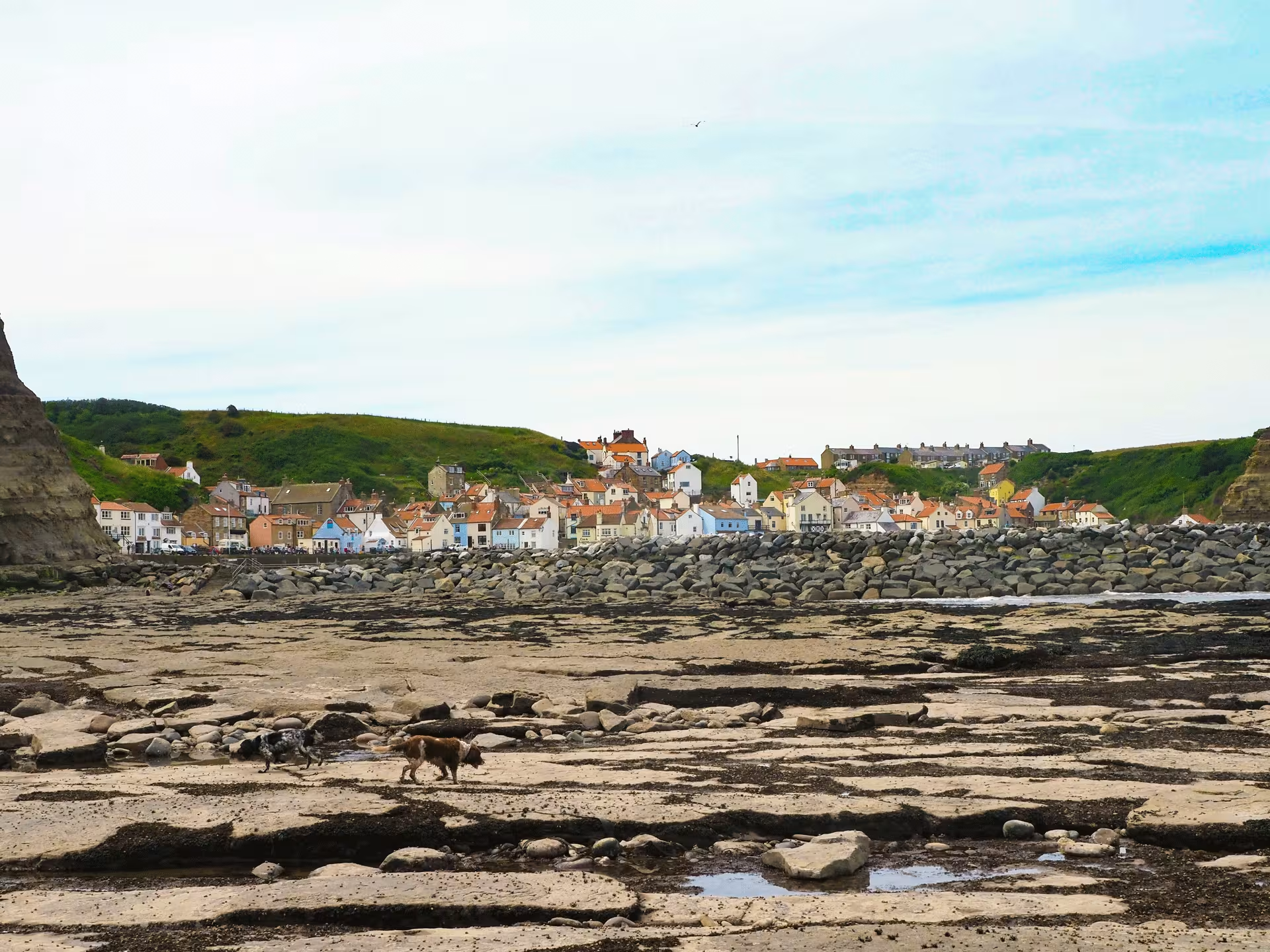
Boggle Hole is a secluded cove on the North Yorkshire coast, near Robin Hood’s Bay. It’s famous for its rock pools, fossils and sea caves. It is also known for the YHA Boggle Hole Hostel, which is a converted 18th century watermill.
Toponymy of Boggle Hole
In folklore, boggles are hobgoblins. Hobgoblins are small, mischievous goblins that lived in caves along the North Yorkshire Coastline and on remote areas of moorland. Boggles were often believed to have magical healing powers, so mothers would bring their poorly children to the boggle hole in the hopes that a boggle would cure them.
18. Sexhow (North Yorkshire)
We’re back with another hamlet. Sexhow is a tiny hamlet near Hutton Rudby.
Sexhow hosts the annual summer Elim Festival, which is organised by the Elim Pentecostal Church. It has also been the home of the Cornshed music festival since 1986.
There is an old folk tale about a dragon that plagued the hamlet, known as the Worm of Sexhow. The beast would feed on dairy before breathing fire over all the farmers’ crops. Eventually, a knight came to the village and killed the dragon, leaving its scaly skin on display inside Hutton Rudby church.
Toponymy of Sexhow
The word “Sexhow” derives from the Old Norse of either “sexhou or sekkshaughr. The word “Sekk” is a personal name, so the full name means “The Hill of Sekk.”
19. Tingley (West Yorkshire)
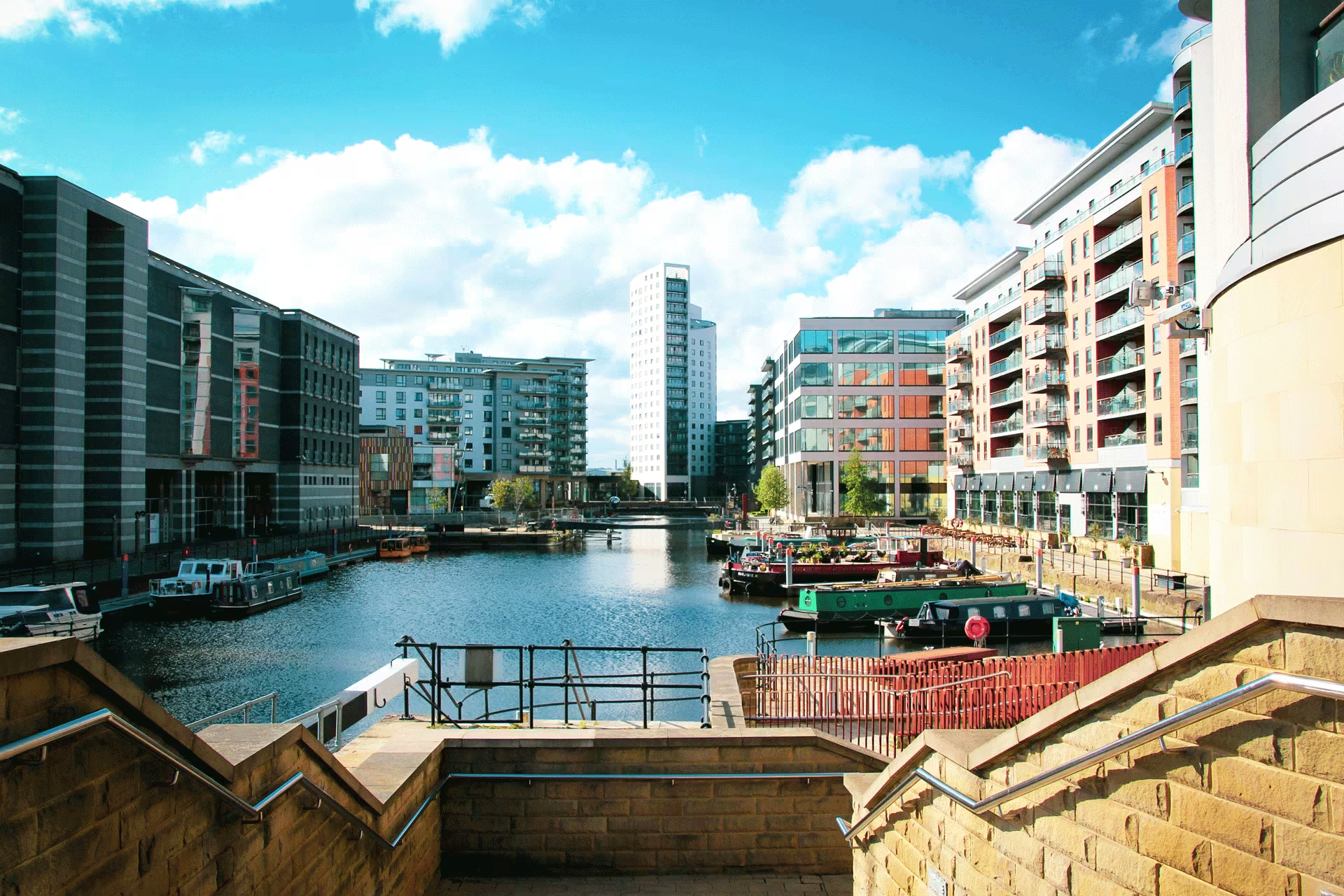
And now we’re really close to home. Tingley is a suburb of our very own Leeds.
Tingley has a connection to an old alien urban legend. In 1980, a very real man called Zigmund Adamski set off from Tingley to go shopping for potatoes in nearby Wakefield. He was never seen again. He turned up on a heap of coal in Todmorden with no coal marks anywhere on his clothing and covered in a strange, sticky substance that has never been identified. It tied in with tales of UFOs coming out of the area at the same time.
Toponymy of Tingley
The name, Tingley, first appeared in the 13th century. It was derived from the Old English þing ('meeting, assembly') and hlāw ('mound, hill, burial mound'). Therefore, it was probably the meeting place for Morley Wapentake.
20. Chop Gate (North Yorkshire)
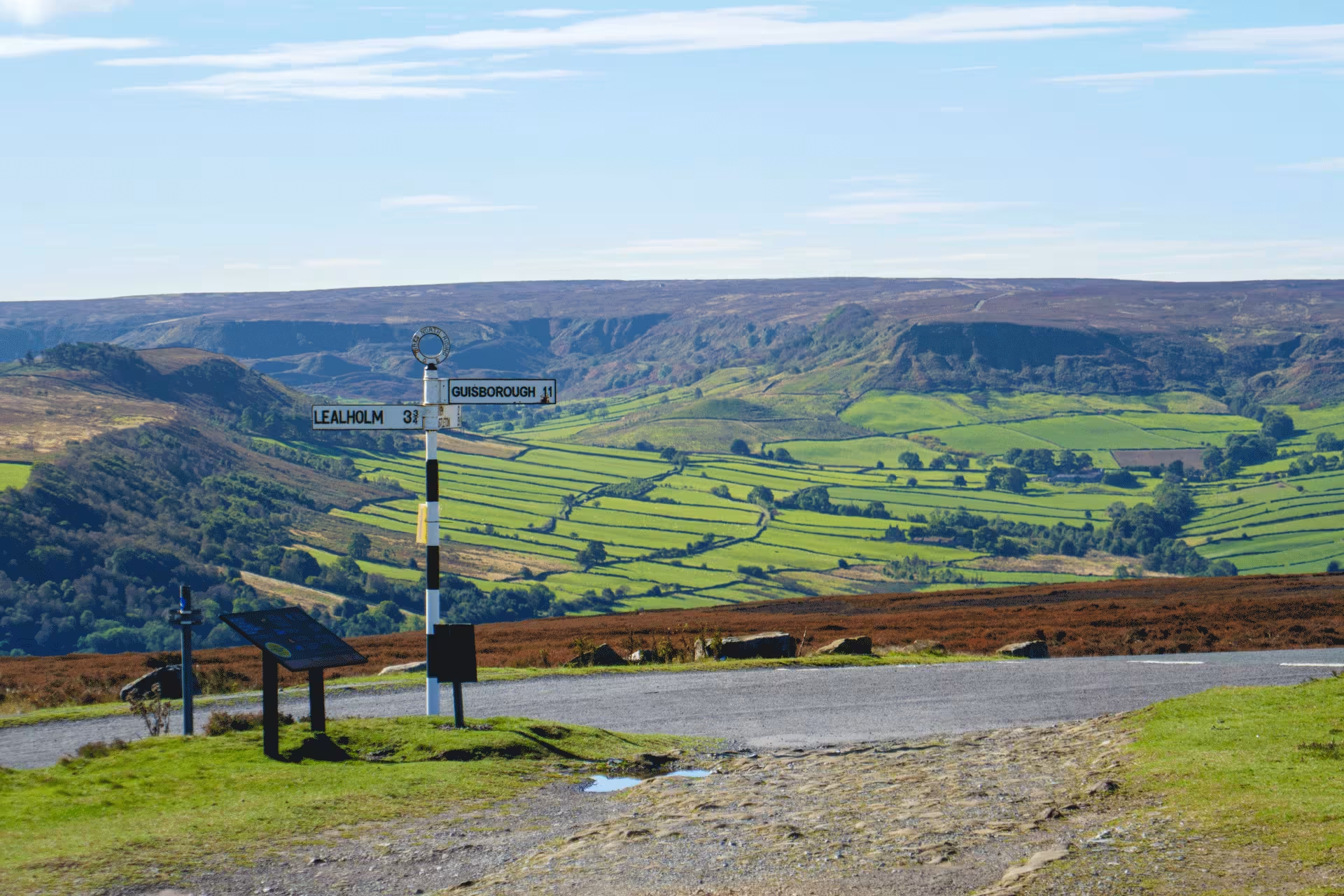
Chop Gate is a little village located in Bilsdale in the North York Moors, not far from Stokesley. Chop Gate isn’t pronounced how you think it should be – rather, the locals call it “Chop Yat.”
There are prehistoric and bronze age remnants scattered throughout Chop Gate and surrounding areas. A collection of around 30 stones called The Bride Stones, stands on a bronze age burial mound on a ridge above Tripsdale.
Toponymy of Chop Gate
Chop derives from the Old English for ceap, which means “pedlar.” Gate (or, indeed yat) comes from the Old English gata, meaning a road. So the whole name translates to “Pedlar’s Road” or “Trader’s Way.”
Yorkshire Is Full of Surprises
And now we’ve come to the end of our list of Funny Yorkshire place names. Which is good because our spellchecker has just exploded!
One of the many things we love most about Yorkshire is its character. From breathtaking landscapes and historic landmarks to colourful dialect and wonderfully funny Yorkshire place names, there's always something new to discover, no matter how long you've lived here.
Whether you've visited every place on this list or you've just discovered a few new destinations to add to your weekend adventures, we hope this list brought a smile to your face and reminded you why Yorkshire Day is such a special occasion.
As a law firm that's proudly called North Leeds home for more than 24 years, we're grateful to be part of such a welcoming and vibrant county. Yorkshire isn't just where we work - it's where we've built relationships, supported local charities and businesses, and become part of a fantastic community.
If you know any other funny Yorkshire place names that deserve a mention, we'd love to hear them. Let us know over on our social media channels. We might just include your favourite in next year's Yorkshire Day celebration!
From everyone at Winston Solicitors, we'd like to wish you a very Happy Yorkshire Day!