I am very happy with the kind and efficient way Mr. Cohen with my requirements.
Mr Page

A person appointed by someone to act for them either now or in the future, either if they have capacity or if they do not. This is usually under a General, Enduring or Lasting Power of Attorney.
Losing a loved one is difficult enough without the extra worry of probate. Our probate solicitors in Leeds provide clear, fixed-fee support so you don’t have to manage everything alone. With over 4,500 five-star reviews, Winston Solicitors are trusted across Leeds and West Yorkshire to handle estates with care and efficiency.
I recently contracted Winston Solicitors to support me in obtaining a grant of probate following the death of a parent. I worked closely with Emily and found her to be supportive, have great communication and be able to navigate the IHT and probate processes very efficiently.
Client, Dewsbury
We believe in transparent costs from the start. That’s why we offer fixed-fee grant-only probate services, so you know exactly what to expect. Our probate solicitors in Leeds can guide you every step of the way.
Probate is the legal process of dealing with someone’s estate after they pass away. This includes valuing their assets, paying debts, and distributing what’s left to beneficiaries.
You don’t have to use a solicitor, but many families in Leeds choose us for peace of mind. Probate can be complex, and mistakes may leave executors personally liable. Our probate solicitors make sure everything is handled correctly, efficiently, and with care.
By working with us, you can avoid delays, stress, and personal liability.
We make probate as simple as possible. Here’s how the process usually works:
Our role is to take the weight off your shoulders. We’ll guide you through each stage, so you feel supported and informed.
Monika Volsing, Head of Private Client
Our probate solicitors in Leeds support families across:
Headingley, Roundhay, Moortown, Chapel Allerton, Horsforth, Garforth, Pudsey, Wetherby, Ilkley, Harrogate and Wakefield.

Wherever you are in West Yorkshire, we’re here to help you manage probate with confidence.
We’ll handle the legal process so you can focus on what really matters - your family.
No, you can apply yourself. But many families choose a solicitor to avoid mistakes, delays, and personal liability. Our Leeds probate team makes the process faster and less stressful.
On average, probate takes around 4–6 months for straightforward estates. Complex cases with property sales, multiple assets or beneficiaries, foreign assets or beneficiaries, or tax issues may take longer.
Yes. But you’ll need to value assets, calculate inheritance tax, complete forms, and settle debts correctly. Many executors prefer a solicitor’s help to reduce risk.
We offer fixed-fee grant-only probate services. For full estate administration, we can provide a clear estimate based on the information you provide about the estate.
We handle official paperwork, HMRC forms, and asset transfers. We make sure debts and taxes are paid before distributing the estate to beneficiaries.
Inheritance funds are often held for up to 6 months after probate, in case someone makes a claim. After that, money is usually released to beneficiaries.
It depends on the estate. Banks, building societies, or land registries may insist on a Grant of Probate before releasing assets. We’ll check what’s required in your case.
The person who administers the deceased’s estate if they died without a will - usually a relative or friend of the deceased.
We estimate it takes one to two years to fully administer an estate, although it can be quicker or slower. It depends on the complexity of the estate (property sales, tax issues, foreign assets or beneficiaries, long lost family, claims against the estate, etc) which is not always something a solicitor can control and how promptly institutions that are part of the process, like the Probate & Land Registries, HMRC, DWP, banks & building societies, respond. However, a solicitor can investigate fully to make sure no stone is left unturned so an estate is fully administered in accordance with the rules; thereby reducing the chances of the executors or administrators of the estate being liable for mistakes. This may take time but is worth it in the long run.
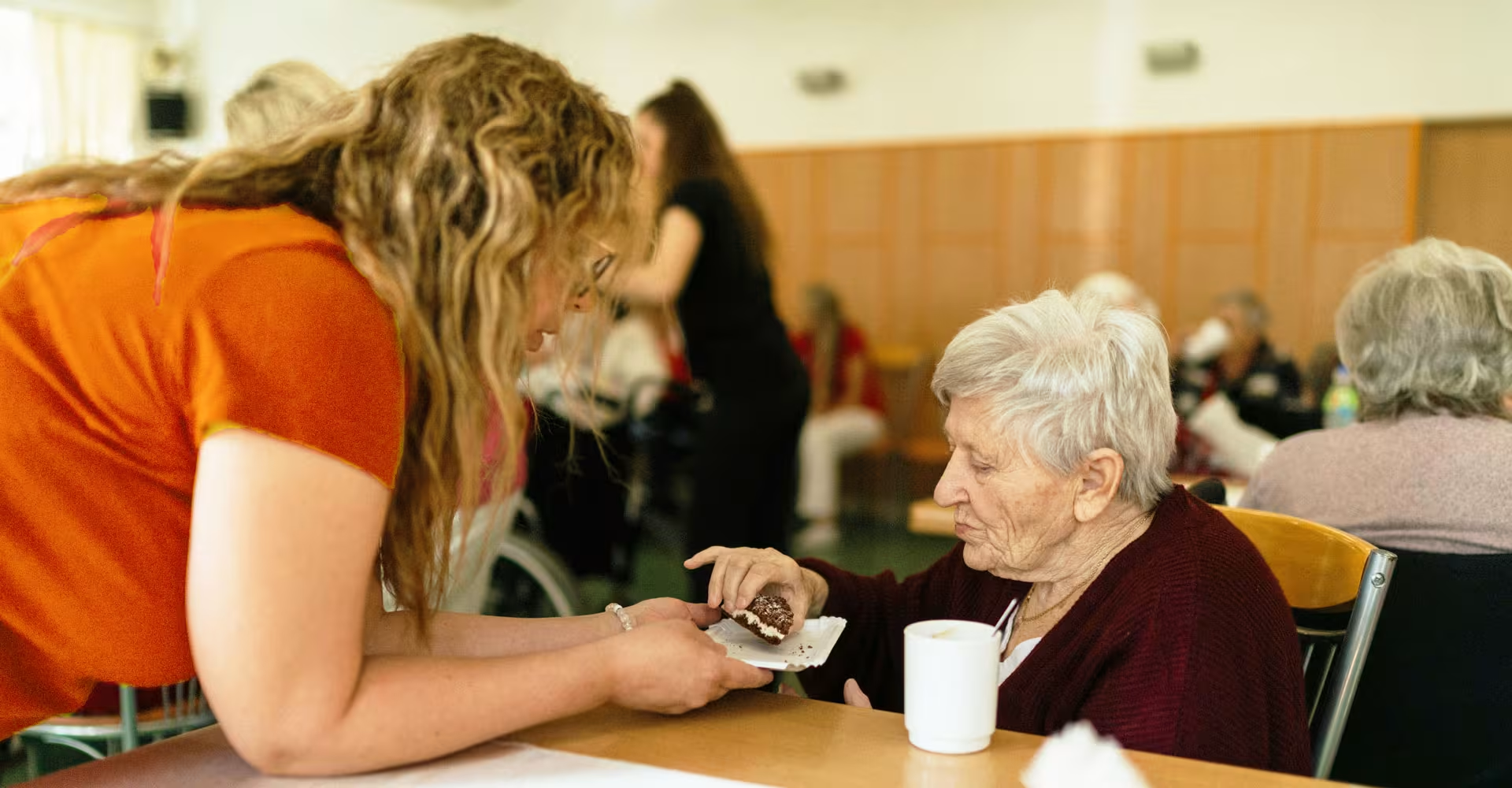
It is estimated that one in four of us will be living in a care home during the final years of our lives. Currently, it is not unusual for care home fees to be up to £52,000 per year or more. Unfortunately, very few of us consider the financial implications of our care fees until it is too late. If you have been prudent and managed to save for your later years, and you own your own home, it is likely that you will have to pay these fees yourself. In a short time, your assets will be eroded so that there is very little left for your children to inherit.
Contact us to discuss whether you are eligible for NHS Continuing Healthcare Funding now, so you know exactly where you stand.
Many couples do not realise that they may be able to safeguard at least half the value of their family home simply by changing the way they own it, combined with having effective Wills.
Most couples own their family home as ‘joint tenants.’ This means that, on the first death, the whole property automatically becomes the survivor’s. Should the survivor then need to go into a care home, the value of the whole property may be counted towards their assets in a financial assessment by the local authority to see if the survivor is liable to pay their fees or if the local authority should. By changing the ownership of the property to ‘tenants in common’, they will then each have their own share of the property. They can make wills once this is done that say the first to die puts their share into trust for, say, their children but allows the survivor to continue living in the property for as long as they need to. Then if the survivor must go into care, they are only assessed by the local authority as owning a half share of the property. This effectively safeguards the value of half the property for the next generation and is known as a life interest trust.
Please note that our asset protection services are most effective before entering care. If the person requiring care is already in a care home, or if the property is solely in their name and unoccupied, we may not be able to assist. We recommend seeking advice before these circumstances arise to ensure the best outcome.
Obviously, legal advice should be taken before transferring any assets, not only to ensure that your wishes are honoured but also so that you do not fall foul of the ‘deprivation of assets’ rule. This allows local authorities to recover assets that they deem to have been deliberately disposed of by the owner so that they can avoid paying their own care fees.
We can provide the advice and guidance you need to effectively protect your assets. Please contact our team on 0113 320 5000.
NB: timescales and fees are subject to change – please ask for details.
Yes but there are consequences. We can advise you on the implications both good and bad.
Care fees:
If you transfer your home into someone else’s name and the sole intention is to avoid the payment of care home fees, the council will deem the transfer to be a “deliberate deprivation of assets”. If the local authority believes a transfer has occurred for this reason, it can place a charge against the property so that care fees are repaid when the property is sold. There is no time limit on this after which it is OK to transfer a property – the local authority can go back as far as they like.
Tax implications:
A transfer of property, in which you are living, to your children can be regarded by HMRC as a “gift with reservation of benefit”. This means that even after seven years have elapsed, it can be treated as part of your estate for inheritance tax purposes. Some people think that they can avoid this if they pay a nominal rent to their children. However, the rules are extremely strict and it is necessary to ensure that the rent paid it a full market rent and that there are regular rent reviews. This is not a comprehensive list of the rules which would apply.
Other consequences:
There can be other unforeseen consequences. For instance, should your child subsequently get into financial difficulty and be made bankrupt, this could result in the trustee in bankruptcy calling for your home to be sold. In addition, if your home is transferred into a child’s name and then that child divorces, their share of the home may form part of their divorce settlement.
Yes, this is possible. If the property is jointly owned by you and your spouse, it is essential that the property is held as tenants in common, rather than joint tenants. It is possible for you to leave your spouse a life interest in your half of the property and if your spouse goes into a care home after you die, only half the value of the house is taken into consideration by the local authority when carrying out a financial assessment to see if they had to pay for their own care. It is essential that the life interest trust is properly worded in the will and you should ensure that you consult a specialist solicitor.
If the couple are both still alive and one of them moves into a care home, the matrimonial home would not be included as part of the financial assessment as it would be part of the mandatory disregard. This means the part of the couple not in the care home could continue to live in the property as normal.
Yes, if the first part of the couple has passed away, the surviving spouse can move to another property of their choice. If there are any access funds left over, there is then a choice as to what happens with these funds. These monies can either be paid out. These monies would be split as follows - half to the survivor out of the couple and the other half to the ultimate beneficiaries. The ultimate beneficiaries would be those named in the Will who are to receive the half of the property belonging to the part of the couple who has passed away first. A common example would be children. The other option is that the monies are invested into a Trust account. The latter is a better option for inheritance tax purposes.
Yes, but only when the first part of the couple has passed away. A life interest trust is a Will trust (rather than a lifetime trust) meaning it only needs to be registered once the first part of the couple has passed away. The trust would be registered with the Trust Registration Service at HMRC. This is something we would be more than capable of assisting clients with.
A deed of variation (DOV) can be used to vary a Will or the intestacy rules after someone dies, within two years of the date of death. DOVs are often used to change the beneficiaries of an estate or the gifts themselves. A DOV cannot help someone to avoid paying care fees as such, and the effect on inheritance tax (IHT) must also be considered.
If you need to go into a care home, the local authority will financially assess you to see if you need to pay for your own fees. An effective way to protect your home from being included in the financial assessment is via life interest trusts (LITs). You can do LITs in your Wills if you own a property in joint names with someone (e.g., your spouse) as tenants in common. The effect of the LIT is that when the first of you dies, the survivor can continue living in the property for life but if they go into a care home, only their half of the property is included in their financial assessment. This is because the deceased’s half of the property is left to the ultimate beneficiaries in the LIT (e.g., your children). Therefore, at least half of the property value is ringfenced for the ultimate beneficiaries.
Where an adult needs to go into a care home, any property they own will be considered by the local authority in their financial assessment to see if they have to pay for their own care fees, unless it is deemed part of the mandatory disregards. Subject to certain conditions, from April 2015 a property must be disregarded from the financial assessment if the person’s child is living there and is: aged over 60; aged under 18; or incapacitated. Therefore, it is as if the person going into care does not own the property so it is not counted in their financial assessment and the child can continue to live there.
Need inheritance tax explained simply? This guide breaks down what IHT is, how it works, and how much your estate might owe. Learn how to reduce your bill with reliefs and exemptions. Based in Leeds, our friendly solicitors are here to help you make sense of it all.
If you're feeling overwhelmed by inheritance tax, you're not alone. Many people don’t realise that not every estate in the UK pays inheritance tax (IHT). It all depends on how much you leave behind and who you leave it to.
When someone dies, HMRC may charge 40% tax on the estate, but only on the value above a certain threshold. This is where it gets confusing. We're here to make it simple.
We help families across Leeds and the UK understand what inheritance tax means for them – in plain English
Monika Volsing, Head of Private Client at Winston Solicitors
According to HMRC, fewer than 4% of estates paid inheritance tax in 2022/23. But those that did often faced unexpected costs due to poor planning or lack of advice.
From April 2027, pension pots become taxable for IHT. This will pull a lot more estates into taxable territory, so this statistic is likely to rise significantly. Meaning that thousands more families having to pay inheritance tax when a loved one dies.
Winston Solicitors gave us peace of mind during a stressful time. Their inheritance advice was a lifeline.
Client, Leeds
To work out if inheritance tax is due, your executors must:
You may be able to double the tax-free allowance to £650,000.
That’s because:
You may qualify for the Residence Nil Rate Band (RNRB), which is an extra £175,000 tax-free if you leave your main home to direct descendants.
So, for many couples:
Yes, with careful planning, you can give away parts of your estate during your lifetime. But there are rules.
Tip: You can take out life insurance to cover the potential bill
Some assets get special tax reliefs. These include:
These reliefs are complex. We’ll help you check what applies to your estate.
Add up your property, cash, pensions, and investments
Use your NRB, RNRB, and spouse’s unused allowance
Make gifts early – ideally 7+ years before death
A solicitor can advise on reliefs, trusts, and legal documents
This helps control who benefits – and how tax is applied
We understand inheritance tax can feel daunting, especially during a difficult time. That’s why our Leeds-based solicitors take the time to explain everything clearly, with no pressure and no jargon.
I would highly recommend Winston Solicitors to help with your personal needs. 100% very professional, very helpful and considerate
Client, Gipton
To speak to a member of our Private Client team to have Inheritance Tax explained, call 0113 320 5000 or leave a message.
Inheritance tax (IHT) is a tax on the estate (property, money and belongings) of someone who has died. It’s usually only paid if the estate is worth over £325,000, and only on the value above that amount.
IHT is calculated by adding up the total value of your estate and subtracting any debts. If the estate is above the tax-free threshold (£325,000), the rest may be taxed at 40%. Certain reliefs and exemptions can reduce this.
Usually, the estate pays the inheritance tax before anything is passed on to beneficiaries. But if you give large gifts during your lifetime and pass away within 7 years, the person who received the gift may be responsible.
Yes, with proper planning. Using your full allowances, making tax-free gifts, leaving money to charity, and using business or property reliefs can help reduce or even avoid IHT altogether. Speak to a solicitor to plan effectively.
Yes. If you're married or in a civil partnership, anything you leave to your spouse is free of IHT. You can also combine your tax-free allowances, meaning up to £1 million of your joint estate could be passed on tax-free.
If you give someone a gift and die within 7 years, that gift may still be taxed as part of your estate. After 7 years, the gift is usually tax-free. This is why early gifting is often recommended.
You don’t have to, but it helps. A solicitor can make sure your will is valid, help reduce tax, and guide your family through the process. The Private Client team at Winston Solicitors in Leeds specialises in clear, compassionate support.
A trust is a legal relationship where assets and income are held by one party for the benefit of another. These assets can be money, investments, land, buildings etc. A trust solicitor provides legal advice and support related to trusts.
The ‘settlor’ transfers some or all of their assets into the trust. These assets make up the ‘trust fund’. ‘Trustees’ are appointed to manage the trust fund. This includes distributing it to the ‘beneficiaries’, the people named as being allowed to benefit from the trust fund.
A trust separates an asset’s legal ownership (actual ownership in name) from its equitable ownership (the right to use the asset or receive any income it produces but not actual ownership). This may be done for tax reasons or to control the asset and its benefits if the settlor is absent, incapacitated or deceased. Trusts are often created in wills to define how an asset will be handled for children and other beneficiaries.

Trustees are given legal title to the assets in the trust fund but are obligated to act in accordance with the terms of the trust, which are usually in the best interests of the beneficiaries.
Trustees can be individuals or a trust company. A trust must have one to four trustees. One of more of these may be a trust solicitor.
You would normally appoint one to four trustees (you can appoint one but this can be problematic if they can’t act any more for some reason). The trustees need to be people who you trust implicitly and who have good judgment, as they are given legal title to the property in the trust. In addition, they are obliged to act in accordance with the terms of the trust and are required to act in the best interests of the beneficiaries. It is very important to choose the right people to be your trustees to ensure that trust assets are looked after properly and that trust monies are used wisely for the benefit of the beneficiaries.
Yes, this is possible. To do this, you need to own a property jointly with someone (e.g. your spouse / civil partner). You then need to include a clause in your wills for a life interest trust. For the trust to be effective, the property must be owned as tenants in common rather than joint tenants (if you are joint tenants, you can sever the joint tenancy to become tenants in common). The trust must specify who you leave your half of the property to (the ‘ultimate beneficiaries’) if you die first but must allow the surviving spouse / civil partner (the ‘life tenant’) to stay living in the property.
The trust is “activated” when the first spouse / civil partner dies. The surviving spouse / civil partner has the right to live in the property for the rest of their life. If they go into residential care, only their half of the property can be included in any financial assessment to see if they must pay their care fees (or if the local authority is liable to pay). This is because the deceased spouse / civil partner’s half of the property is held on trust for the ultimate beneficiaries, in effect, ringfencing it from being used up paying the survivor’s care fees.
Yes, this is possible. If the property is jointly owned by you and your spouse, it is essential that the property is held as tenants in common, rather than joint tenants. It is possible for you to leave your spouse a life interest in your half of the property and if your spouse goes into a care home after you die, only half the value of the house is taken into consideration by the local authority when carrying out a financial assessment to see if they had to pay for their own care. It is essential that the life interest trust is properly worded in the will and you should ensure that you consult a specialist solicitor.
If a person has not made a Lasting Power of Attorney or an Enduring Power of Attorney before 1 October 2007 and that person becomes mentally incapable of managing their financial affairs, something may have to be done to appoint a deputy solicitor.
The Court of Protection deals with legal matters for vulnerable people and people who don’t have mental capacity. They can appoint someone to act in a person’s best interests as their deputy.

Although there are similarities between attorneys and deputies, the deputyship application process is longer and more costly than applying for a Lasting Power of Attorney. In addition, the deputy must comply with extensive reporting obligations to the Office of the Public Guardian on an ongoing basis.
A person can become someone’s deputy for property and financial affairs, or health and welfare, although the latter is rarer.
You can read more about deputyships here.
To talk to one of our team about applying for a deputyship order please email wills&probate@winstonsolicitors.co.uk or call us on 0113 320 5000.
NB: timescales and fees are subject to change – please ask for details.
A Lasting Power of Attorney (LPA) is a legal document which allows a person (the donor) to appoint someone or more than one person they trust (attorneys) to make decisions for them when they no longer have the mental capacity to make the decisions themselves. An LPA has to be made while the donor still has the mental capacity to give their consent to it.
No. Your family will have no access to your bank accounts and cannot sell your property unless they make an application to the Court of Protection for a deputyship order, which is a costly and lengthy process.