
Are Birdnesting Child Arrangements After Divorce Right for You?
When parents separate, one of the most difficult questions is often the simplest to ask but the hardest to answer: where will the children live? Birdnesting child arrangements offer a unique way to centre your children when you divorce.
Speak to a family law expert today. Call 0113 320 5000
For many families, the traditional approach involves children moving between two homes, adjusting to different routines, environments, and sometimes even communities. While this works well in some situations, others are exploring a different model altogether. One that turns the usual arrangement on its head. It is known as birdnesting.
Birdnesting or “nesting” is a co-parenting arrangement where the children remain living in the family home and the parents take turns moving in and out to care for them. Instead of children packing bags and transitioning between households, it is the adults who take on that responsibility.
At first glance, it can seem like an ideal solution. It offers stability for children at a time of emotional upheaval. But like many family law arrangements, the reality is more nuanced.
What Is Birdnesting and Why Are Families Considering It?
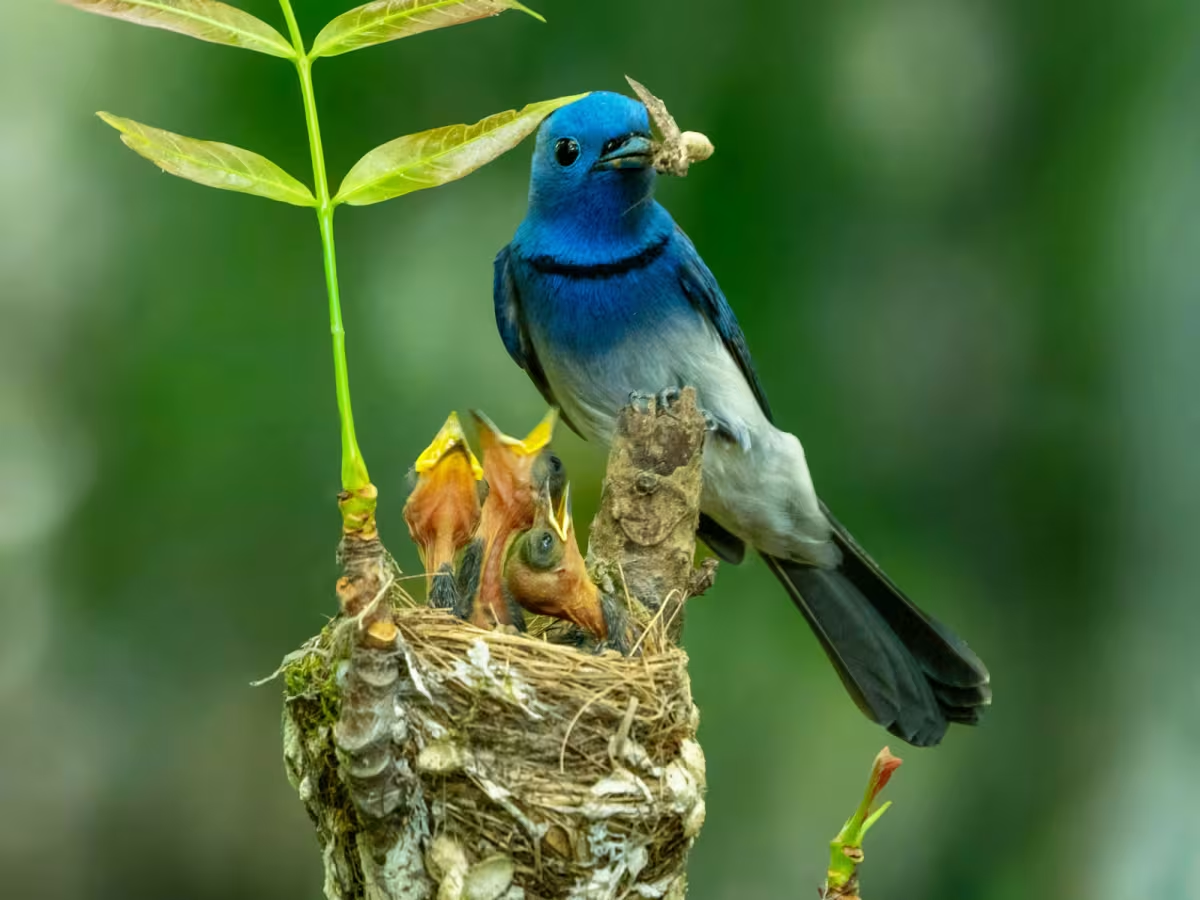
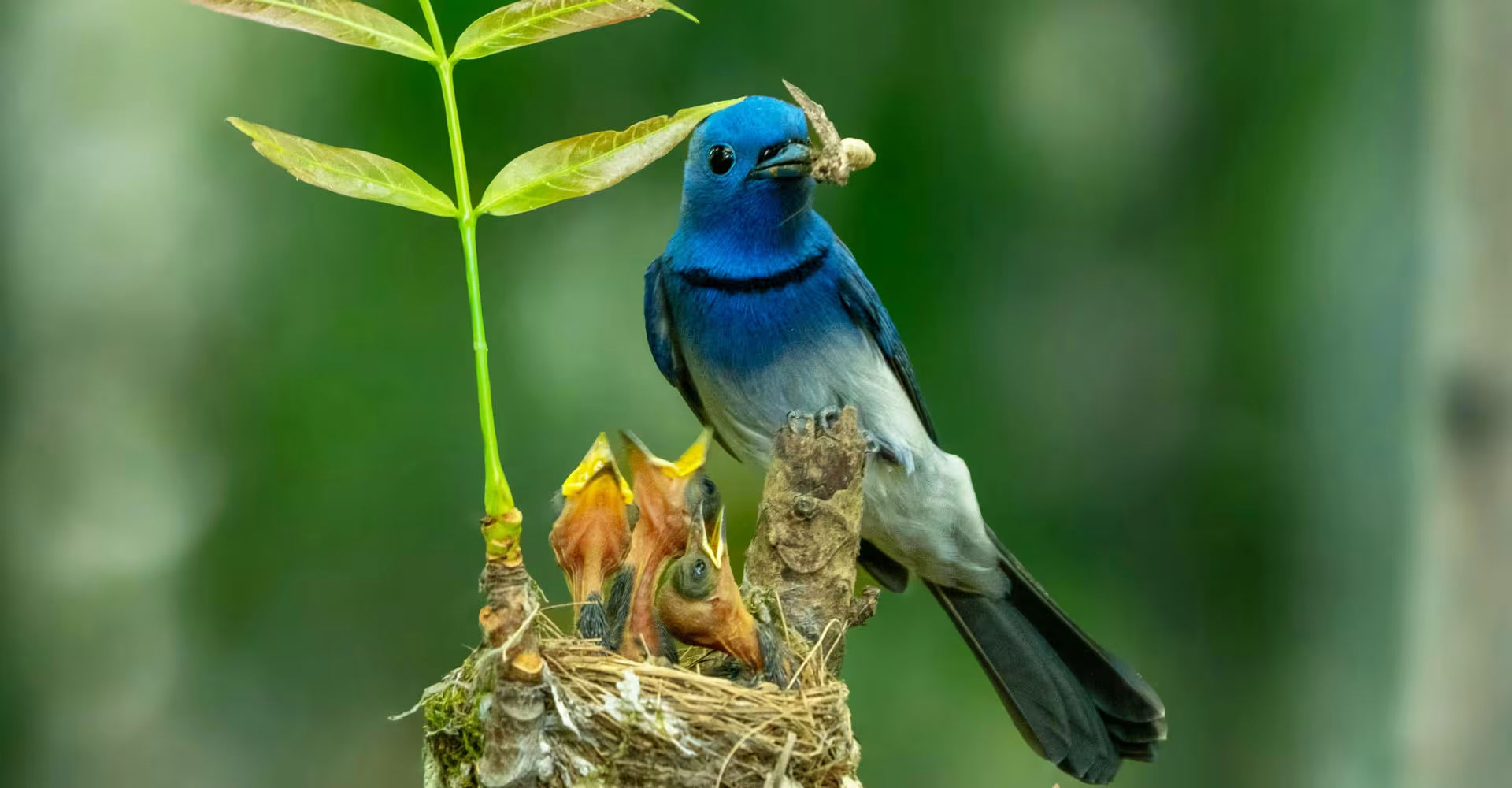
The term birdnesting comes from nature, where parent birds leave and return to the nest to care for their young. In the context of divorce or separation, it reflects a shared commitment to keeping the children’s environment consistent while parents live separately.
For children, particularly younger ones, this can be incredibly reassuring. Their bedroom stays the same. The school run does not change. Local friendships remain intact. At a time when family life feels uncertain, the physical environment offers a sense of continuity.
Increasingly, parents are considering birdnesting child arrangements because they want to reduce disruption. They recognise that separation is already a significant emotional event, and they are looking for ways to soften its impact.
In some cases, birdnesting is used as a temporary arrangement during the early stages of separation. In others, it becomes a longer-term solution where parents are able to maintain a cooperative and structured approach.
The Emotional Benefits for Children
From a child’s perspective, birdnesting can offer a level of stability that is difficult to achieve with more traditional arrangements.
Children do not have to move between homes or adjust to different sleeping arrangements. They are not required to remember where their belongings are or adapt to different household rules in quick succession. Instead, their day-to-day life remains familiar. This can be particularly beneficial for children who are already struggling with the emotional impact of their parents’ separation. Maintaining a consistent environment can help reduce anxiety and provide a sense of security.
Parents often report that birdnesting allows children to process the separation at their own pace, without the added pressure of logistical change.
Birdnesting Child Arrangements – The Reality for Parents.
While birdnesting can potentially work well for children, it requires a high level of cooperation and communication between parents. It is important to recognise that this arrangement does not remove conflict. In fact, it can sometimes bring challenges into sharper focus.
Parents must coordinate schedules, manage shared responsibilities for the home, and maintain clear boundaries. They also need to consider their own living arrangements when they are not in the family home. This often means that each parent requires alternative accommodation, whether that is a separate property, staying with family, or sharing a secondary residence.
Over time, this can become financially and emotionally demanding.
Practical Challenges of Birdnesting
Although the concept is simple, the practicalities can be complex.
Financial considerations are often the first hurdle. Maintaining the family home while also funding additional accommodation for one or both parents can be expensive. This may not be sustainable in the long term, particularly where resources are limited.
There are also logistical issues to consider. Household responsibilities must be clearly defined. Who pays the bills? Who maintains the property? How are day-to-day decisions managed? Without clear agreements in place, misunderstandings can arise quickly.
One parent may also consider this to be a short-term arrangement, while the other sees it as more long-term. This can cause conflict over time if the agreement is not clear. It can also lead to one parent having the resources to finance a more secure long-term second home, while the other cannot, which can feel unfair the longer the arrangement continues.
Privacy is another important factor. Even where relationships are amicable, sharing a home in this way can feel intrusive. Personal space becomes limited, and boundaries must be carefully respected.
When Birdnesting Works Well.
Birdnesting child arrangements tend to work best in specific circumstances.
They are often successful where there is a strong foundation of trust and communication between parents, and where both parties are committed to prioritising the children’s needs above all else.
They can also be effective as a short-term solution, giving families time to adjust before transitioning into a more traditional arrangement.
Where finances allow, and where expectations are clearly defined, birdnesting can provide a structured and supportive environment for children during a period of change.
Situations Where It May Be More Challenging
It is equally important to recognise that birdnesting is not suitable for every family.
Where there is ongoing conflict, poor communication, or unresolved emotional issues, this type of arrangement can become difficult to maintain. It may even increase tension if boundaries are not respected.
Similarly, where financial pressures are significant, the cost of maintaining multiple living arrangements can outweigh the benefits.
In some cases, new relationships can also complicate the situation, particularly if one or both parents wish to introduce new partners into their lives.
The children also need to understand what this new arrangement means – it could lead to them thinking that their parents are not permanently separating, which might just defer, and potentially increase, the emotional impact of change.
Key Considerations Before Choosing Birdnesting.
For parents considering this approach, careful planning is essential. It is not enough to agree in principle. The success of birdnesting often depends on the detail.
Some of the most important questions to address include:
- How long the arrangement is intended to last and whether it is a short-term or long-term solution
- How financial responsibilities will be shared, including mortgage, rent, and household bills
- How parenting schedules will be structured and communicated
- What boundaries will be in place to ensure privacy and respect for each parent
- How decisions about the children and the home will be made
- Importantly, how the plans will be communicated to children and what they mean for them in the longer-term
- Having these discussions early can prevent disputes later on and create a clearer framework for day-to-day living.
The Legal Perspective
From a legal standpoint, birdnesting is simply one form of co-parenting arrangement. It does not change the underlying legal responsibilities of either parent.
However, it is still important to formalise arrangements where possible, particularly where financial commitments are involved.
A well-drafted agreement can provide clarity and reduce the risk of future conflict. This may form part of a broader financial settlement or be addressed within a parenting plan.
Legal advice can also help parents understand how birdnesting fits within the wider context of divorce proceedings, including property ownership and financial division, and whether it might disadvantage one parent over the other in the longer-term.
Looking to the Future
One of the most important aspects of birdnesting is recognising that it may not be a permanent solution.
Children grow older, circumstances change, and what works at one stage may not be sustainable in the long term.
For many families, birdnesting provides a transitional period. It allows time for emotions to settle, for practical arrangements to be tested, and for longer-term decisions to be made with greater clarity.
Approaching it with flexibility, rather than as a fixed solution, can make it more effective, however this can lead to later conflict if expectations are widely different between the parents.
Sound Advice on Birdnesting Child Arrangements.
Birdnesting child arrangements can be a thoughtful and child-focused approach to co-parenting after separation. At its best, it offers stability, continuity, and reassurance for children during one of the most challenging periods of their lives.
However, it is not without its challenges. It requires cooperation, clear communication, and careful financial planning. It also demands a willingness from both parents to prioritise the needs of their children above personal convenience.
For some families, it can be an excellent short-term solution. For others, it may not be practical or sustainable.
Our Family Law team understands that no two families are the same. We work closely with parents to explore the options available, helping them to find arrangements that are not only legally sound, but also workable in everyday life.
Because when it comes to children, the goal is always the same. To create a sense of stability, security, and support, even when life has changed.