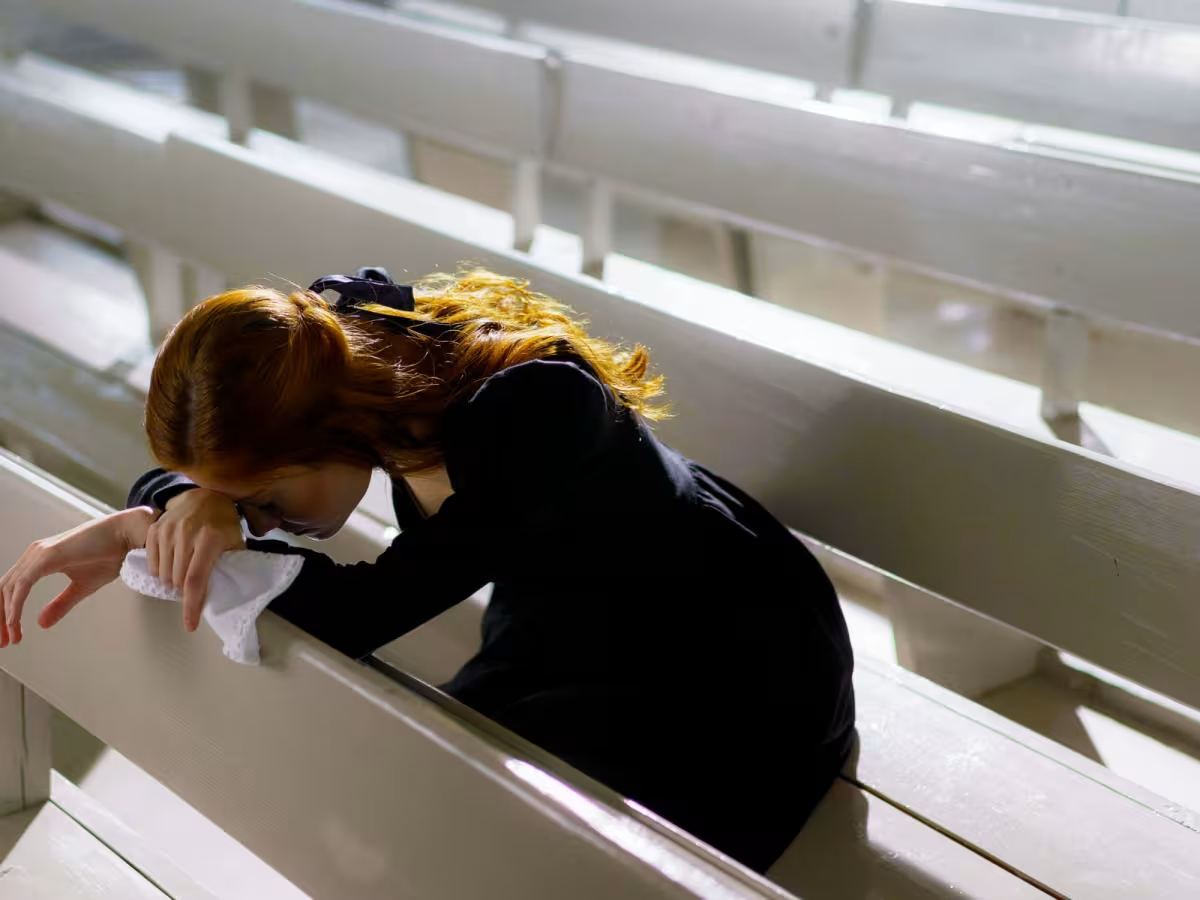

Spiritual Abuse and the Church of England Redress Scheme
For many people, faith is deeply connected to safety, identity, family and community. Places of worship are often seen as environments built on trust and moral guidance. When spiritual abuse happens within those settings, the effects can reach far beyond the initial harm itself.
Register your interest in the Church of England Redress Scheme
Spiritual abuse can have a profound and lasting impact on a person’s emotional wellbeing, relationships, confidence and sense of self. Survivors often describe not only the trauma of the abuse they experienced, but also the confusion and isolation that can come from being harmed in an environment that was supposed to offer protection and support.

In recent years, the Church of England has publicly acknowledged serious failings in how abuse allegations were handled historically. The creation of the Church of England Redress Scheme is part of that recognition and accountability. Importantly, this is not a scheme created by external campaigners or legal firms acting against the Church independently. The scheme itself has been established by the Church of England as part of its response to past abuse and institutional failings.
Understanding this distinction matters, particularly for survivors who may feel conflicted about coming forward or uncomfortable with criticism directed towards their faith community. The Redress Scheme represents an acceptance by the Church that harm occurred and that meaningful steps towards accountability and reparations are necessary.
What Is Spiritual Abuse?
Spiritual abuse can take many forms. In some cases, it involves the misuse of religious authority or scripture to manipulate, intimidate, shame or control individuals. For others, it may exist alongside physical, emotional or sexual abuse within a religious setting.
The effects can be especially complex because faith and trust are often deeply intertwined. Survivors may struggle not only with the abuse itself, but with the collapse of a belief system or community they once relied upon.
Spiritual abuse may involve:
- Religious authority being used to silence, frighten, or control someone
- Victims being made to feel responsible for abuse or wrongdoing
- Threats of shame, exclusion, punishment, or spiritual consequences
- Abuse being ignored or concealed to protect institutions or reputations
For many survivors, these experiences can affect every aspect of life long after the abuse has ended.
The Long-Term Effects of Spiritual Abuse
The impact of spiritual abuse is often misunderstood. Many survivors spend years questioning whether what happened to them was “serious enough” to matter. Particularly if they were manipulated into believing that obedience, silence, or forgiveness were expected of them. Others may feel guilt for speaking out against religious figures or organisations they once trusted.
The emotional consequences can include anxiety, depression, complex trauma, low self-worth, difficulty trusting others and feelings of shame. Some survivors lose their connection to faith entirely. Others continue to hold religious beliefs while struggling with anger, grief, or confusion about the institution connected to their abuse.
Relationships can also suffer. Survivors may withdraw from family members, avoid community spaces, or find it difficult to build healthy boundaries in later life. For some people, the effects extend into education, employment, housing stability, and mental health for many years.
One of the most painful aspects of spiritual abuse is that it often leaves people feeling invisible. Abuse within religious environments has historically been minimised, hidden, or dismissed in ways that compound the original trauma.
This is one reason why public acknowledgment and institutional accountability are so important.
Why Accountability Matters
For many survivors, accountability is not simply about financial compensation. It is about recognition.
Being believed matters.
Having institutions openly acknowledge failures matters.
Knowing that what happened was wrong, and should never have happened, matters.
To speak to a member of the CICA team call 0113 320 5000
The Church of England Redress Scheme is significant because it reflects an acceptance by the Church itself that serious harm occurred and that survivors deserve support and acknowledgment. This is not an external attack on religion or faith communities. The Church has publicly accepted that failures took place and that reparations are needed.
That distinction is important because discussions around abuse within religious settings can quickly become emotionally charged. Some people worry that criticism of abuse within the Church is an attempt to attack Christianity or faith more broadly. In reality, the Redress Scheme exists because the Church of England itself has recognised the need to address past wrongdoing and support those affected.
For survivors, that acknowledgment can be deeply meaningful.
Many people who experienced abuse in religious settings grew up being told that the Church represented morality, protection, and truth. When institutions fail to address abuse, survivors may feel as though their pain is being denied or erased. Public accountability helps challenge that silence.
It also helps shift responsibility away from victims and onto the systems and individuals who failed to protect them.
What Is the Church of England Redress Scheme?
The Church of England Redress Scheme is a national scheme designed to provide support to people who experienced abuse connected to the Church.
The scheme is expected to include financial compensation alongside other forms of redress, such as formal apologies, therapeutic support, and acknowledgment of harm suffered.
Importantly, the scheme has been developed following years of scrutiny, survivor advocacy, and investigations into institutional failings, including findings connected to the Independent Inquiry into Child Sexual Abuse.
The Church of England has stated that the scheme is intended to be survivor-focused and independently administered.
At the time of writing, the scheme has received approval from the General Synod but is not yet fully operational. Survivors can currently register their interest while final legal processes are completed.
Why Some Survivors Feel Uncertain About Coming Forward
Coming forward after abuse is rarely straightforward.
For survivors of spiritual abuse, there can be additional layers of fear and emotional conflict. Some people worry about being judged by their communities or families. Others fear they will not be believed, particularly if the abuse happened many years ago.
Some survivors still feel connected to their faith and struggle with the idea of speaking about harm linked to religious institutions. Others feel angry or distrustful after years of silence and inaction.
These reactions are understandable.
Seeking information about the Church of England Redress Scheme does not mean attacking faith or religion. For many survivors, it is simply about understanding what support may now be available and whether acknowledgment is finally possible.
It is also important to remember that exploring your options does not commit you to making a claim. Many people first seek advice simply to better understand the process and whether the scheme may apply to their circumstances.
Moving Towards Recognition and Repair
No compensation scheme can erase what happened to survivors of abuse. However, acknowledgment and accountability can still matter deeply.
The Church of England Redress Scheme represents an important moment because it reflects institutional recognition that serious failures occurred and that survivors deserve to be heard and supported. For many people, that acknowledgment alone may carry significant emotional weight.
The wider conversation around spiritual abuse is also becoming more open. Survivors who once felt isolated are increasingly seeing their experiences recognised publicly and taken seriously.
That visibility matters because silence and denial often allow harm to continue unchecked.
By accepting responsibility and establishing a formal redress process, the Church of England is acknowledging that these abuses happened and that survivors deserve meaningful reparations and support.
For many victims and survivors, that recognition is an important step towards justice.
Send a message to the CICA team