Understanding the Legal Standpoint on Securing NHS Continuing Healthcare Assessments in Hospital
When a loved one is admitted to an acute hospital ward following an injury, stroke, or sudden decline in health, it is an immensely stressful time for families. As treatment progresses and discharge planning begins, it can quickly become clear that a straightforward return home is no longer realistic. A substantial package of care, whether at home or in a residential or nursing home, may be required.
Families often face an immediate and understandable financial concern in these cases. They wonder who is going to pay for this care once the patient leaves hospital. Knowing that NHS care is free at the point of delivery, whereas social care is generally means-tested, many families naturally begin asking whether they can request NHS Continuing Healthcare assessments in hospital, rather than after their relative has been discharged.That is a perfectly sensible question.
In a large proportion of cases that we encounter, when families raise the topic of CHC on the ward, they are very often met with a firm refusal from hospital staff and Integrated Care Boards (ICBs). That refusal is commonly justified by reference to hospital discharge policy. The National Framework is also often mentioned, as well as the principle that longer-term needs should not usually be assessed in an acute setting. The result is a real tension between the strict legal position and the practical approach adopted across the NHS.
The Conflict: Public Law vs. Policy Guidance on NHS Continuing Healthcare Assessments in Hospitals
1. The strict legal position on NHS Continuing Healthcare Assessments in Hospital
From a pure public law perspective, there is a credible argument that an ICB should not adopt a blanket refusal to assess a patient solely because they are in hospital. Under Regulation 21(2) of the National Health Service Commissioning Board and Clinical Commissioning Groups (Responsibilities and Standing Rules) Regulations 2012, an ICB is under a legal duty to take reasonable steps to ensure that an assessment of eligibility for CHC is carried out where it appears that there may be a need for such care. However, whether such an argument would succeed in any individual case is highly fact‑sensitive and dependent on the timing, clinical circumstances and discharge plan.
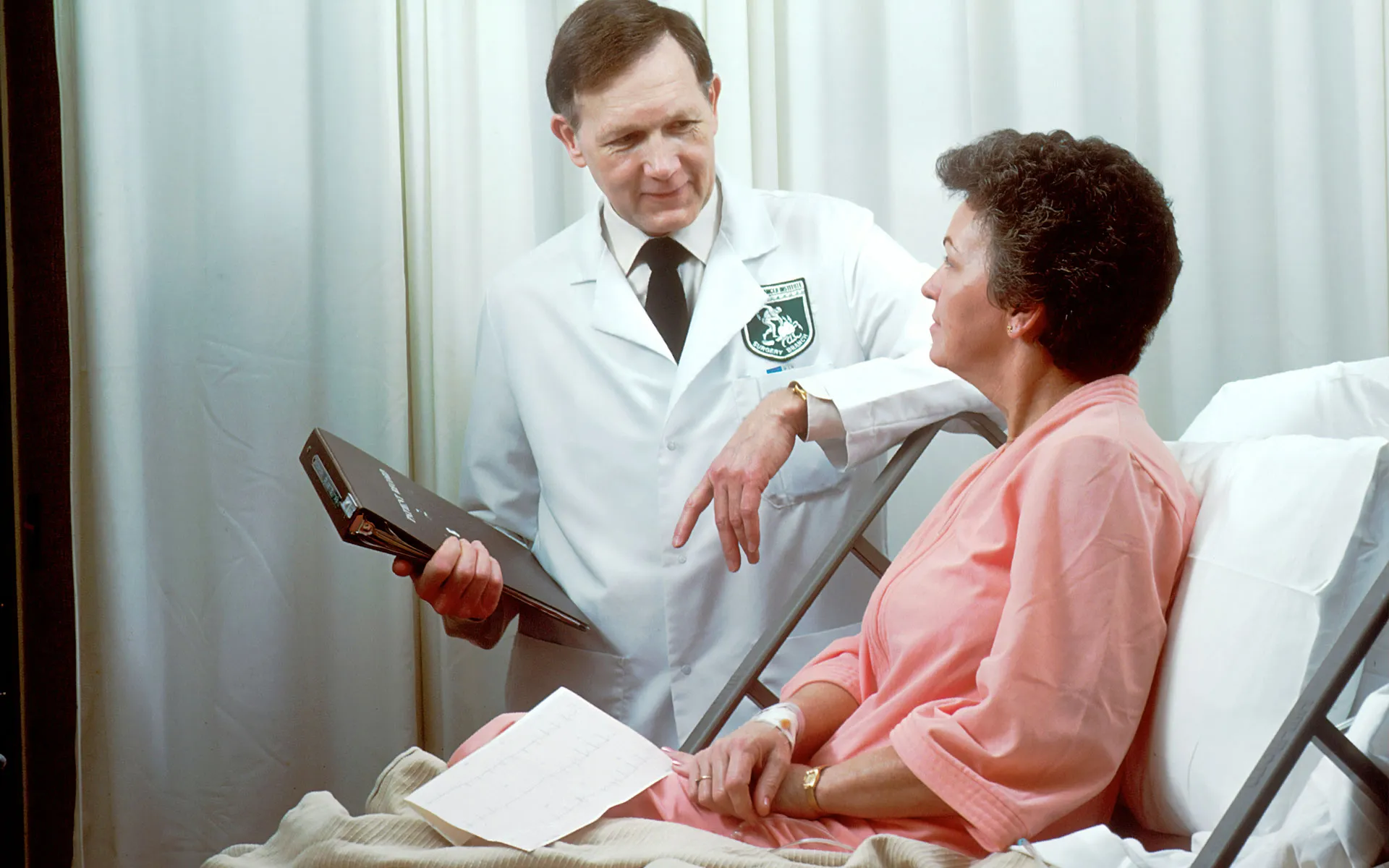
If a patient is medically stable but facing discharge with profound, long-term physical or cognitive impairment, it may well “appear” that they have a potential need for CHC. On that analysis, a rigid local practice of refusing to consider assessment until after discharge is open to criticism. In some cases, a refusal of that kind may be susceptible to challenge by way of a High Court claim for Judicial Review. That is a specialist and highly fact-sensitive area of public law, and it does not follow that formal court proceedings will be appropriate, proportionate or commercially sensible in all hospital cases.
2. The policy and guidance position (The National Framework)
Set against that strict legal analysis is the policy position reflected in the National Framework for NHS Continuing Healthcare and NHS-funded Nursing Care. As well as the wider “Discharge to Assess” model. The practical thrust of the statutory guidance is that, in most cases, a full CHC assessment should take place outside the acute hospital environment, once longer-term needs are clearer.
The Framework and its associated guidance rely on several core justifications for that approach.
Firstly, there is the principle of optimisation. The idea that a fair and reliable assessment of longer-term care needs can usually only take place once a person has had the opportunity to recover as far as possible and settle into a more stable care environment.
Secondly, there is the concern that acute settings can present a distorted picture of need. Hospital admission, delirium, sleep disruption, unfamiliar surroundings and temporary dependency may all affect how a patient presents.
Thirdly, the guidance strongly emphasises that CHC processes should not delay safe discharge from hospital. This distortion can work in either direction and may not provide a reliable basis for assessing sustained, long-term need.
The consequence is that, even where a refusal to assess in hospital may be actionable in law, the practical reality is that the NHS will generally not be willing to undertake NHS Continuing Healthcare Assessments in hospital. Instead, seeking to defer any substantive CHC assessment until after discharge.
Reality On the Ground - Why NHS Continuing Healthcare Assessments in Hospital May Not Be in Your Best Interests
The fact that an in-hospital refusal may be open to legal criticism does not necessarily mean that forcing an assessment on the ward is the right strategy for a family.
Distorted clinical picture
As discussed above, an acute hospital environment may not reflect a person’s longer-term functioning. A patient may appear significantly more confused, more dependent or more unstable because of the immediate clinical context. Equally, there may still be scope for recovery which cannot yet be measured. In those circumstances, an assessment may not actually produce the clearest or fairest picture of ongoing need.
Heavy reliance on documented care evidence
In practice, successful CHC applications are often built on detailed, day-to-day evidence showing the interventions required to manage the patient’s needs on a 24/7 basis. Hospital records do not always provide that kind of evidence. Acute nursing notes tend to focus on observations, medication, treatment and discharge planning, rather than setting out in a structured way the continuing care interventions needed to manage a person safely over time. By contrast, once a patient is in the community with a package of care, the evidential position often becomes much clearer.
The reality of legal mootness
Even if a judicial review solicitor is instructed promptly and a formal challenge is sent to the ICB, discharge arrangements may continue in the meantime. There is therefore an inherent risk that by the time the refusal to assess for CHC has been considered fully and resolved, that the patient may already have left hospital and the ICB may now be willing to undertake the CHC assessment because the patient is receiving a package of care in the community.
In many cases, the immediate issue is not whether care will be provided at all, but how that care will be funded.
Families understandably worry that if CHC is not assessed immediately, the patient may be left without care. In most cases, however, the immediate issue is not whether care will be provided at all, but how it will be funded. If safe discharge arrangements can be put in place, efforts and resources may be better directed towards preparing a strong CHC application once the patient’s day-to-day needs can be properly evidenced. That does not mean legal advice is unnecessary. On the contrary, timely advice can be very valuable in ensuring that discharge arrangements, interim funding and evidence gathering do not prejudice the patient’s longer-term position.
The subjective nature of the criteria
CHC eligibility is also inherently evaluative. Even strong cases depend on how needs are described, evidenced and interpreted. A rushed or poorly prepared MDT on a busy ward may result in an unsatisfactory decision which is based on incomplete evidence and an underdeveloped understanding of the patient’s likely ongoing needs. In many cases, that is not the strongest footing from which to pursue an eligibility decision from an ICB.
Practical Considerations - A Strategic Roadmap for Families
While the strict legal position indicates that a blanket refusal to assess a patient in hospital may be unlawful, that does not mean that a hospital-based CHC assessment is the most effective route in every case. In reality, the right strategy depends on the individual’s clinical circumstances, the urgency of discharge, the evidence available and the question of what outcome is actually being sought.
1. In-hospital challenge
There will be cases in which a refusal to give an NHS Continuing Healthcare assessment in hospitals is procedurally or legally questionable. Particularly where the patient’s needs are already clearly established and there is a rigid insistence that CHC will not even be considered before discharge. In that kind of case, public law arguments may arise. Legal action in that arena is specialist and time-sensitive remedy, which carries the usual risks which are inherent in all litigation.
A formal complaint is another possible mechanism for challenging decision-making. This carries the benefit of costing nothing unless a professional is paid to assist with it. However, complaints procedures are administrative in nature and are typically slow and so are not well-suited to resolving urgent discharge issues in real time.
2. Where an assessment is undertaken in hospital
Occasionally, despite the general policy position, a Checklist or even a full MDT assessment will be undertaken before discharge. If that happens, the focus should shift immediately from arguing about whether the assessment ought to occur, to ensuring that the process is thorough, properly evidenced and not rushed.
This is the stage at which careful preparation and representation can make a real difference. The clinical picture must be captured accurately. Care needs must be described in a way which reflects their full nature, intensity, complexity and unpredictability.
3. The most common route: discharge first (in appropriate cases)
In many cases we encounter, it may be appropriate to allow discharge to take place under suitable interim arrangements, and then to consider the CHC position once the patient is in the community where their ongoing needs can be more clearly identified and evidenced. Particularly where the issue is one of funding rather than any immediate concern about the safety of discharge arrangements. Therefore, the timing of any CHC assessment should be considered as part of an overall strategy in each case. Rather than approaching it as a question of whether to ‘wait’ or ‘proceed’ in isolation.
That is not a universal approach. Each case turns on its own facts. Decisions about discharge and CHC assessment should always be considered carefully. Where appropriate, with the benefit of specialist advice. In particular, if there are concerns about the adequacy or safety of proposed care arrangements, those issues should be addressed as a priority.
Where discharge does proceed, and a patient moves into a more stable setting the evidential picture often develops significantly. Whether that’s at home with a package of care, or in a care home. Regular care records, risk incidents, behavioural issues, supervision needs, clinical interventions and night-time care requirements can then be documented consistently over time. In practice, this can provide a clearer and more reliable foundation for a CHC application [LINK - https://www.winstonsolicitors.co.uk/blog/nhs-continuing-healthcare-fund…] than an assessment attempted during an acute admission.
Once needs are better understood and supported by a developing body of evidence, specialist CHC input can be of most practical value in most cases. A carefully prepared application, grounded in consistent care records and a clear presentation of need, will generally place families in a stronger position when the question of eligibility is ultimately determined.
4. An important point after discharge: “not optimised” cannot be used indefinitely
The NHS may rely on the concept of optimisation to justify not conducting NHS Continuing Healthcare assessments in hospital. For the reasons discussed above, that may be understandable. However, once a patient has been discharged into the community and is living with an ongoing package of care, the continued reliance on ‘optimisation’ without any clear plan or timescale for assessment may be open to legitimate challenge.
At that stage, a patient may already have an established pattern of ongoing need, supported by regular care records and a functioning care package. In those circumstances, a refusal to progress CHC assessment on vague or repeated optimisation grounds may itself be open to challenge. That is not the same issue as trying to force NHS Continuing Healthcare assessments in hospital in an acute setting. It is a materially stronger position, both evidentially and practically, because the patient’s day-to-day care needs are now being demonstrated in the real world rather than inferred from acute admission notes.
How We Can Help
The question of NHS Continuing Healthcare assessments in hospital is often closely tied to discharge planning, interim funding arrangements, and the timing of any subsequent assessment. In many cases, the immediate priority is ensuring that appropriate care arrangements are put in place safely as the patient leaves hospital.
Once a patient has been discharged and is receiving a package of care in the community, the CHC position may become clearer. Needs can then be identified and evidenced by detailed care records and a more consistent understanding of day-to-day care requirements.
It is at that stage that many families are in a stronger position to progress a CHC application in a structured and effective way. Our focus is on supporting families through that process, including:
- identifying whether CHC eligibility should properly be considered;
- preparing and coordinating the evidence needed to support an application;
- assisting during the MDT and Decision Support Tool assessment process, such as by advising you and acting as your advocate; and
- advising where there are delays or refusals to assess, despite an established package of care.
providing initial advice on strategy, timing and evidence, including whether it is appropriate to pursue an assessment at hospital stage or after discharge.